
Sylvia’s Trans Canada Trail: Winter is the Best Time to Look Up

Written by Sylvia Dekker
Over the next few months, the sky will be doing its best to pull you out of your warm cozy house and trying to convince you to go for a starlit walk or cozy campout. It’s important you let it.
Inarguably winter is the best season for nighttime forays onto the Trans Canada Trail, and not just because of the deep quiet and sparkling cold. Look up on a clear, frosty night and you’ll forget all about your soft couch: the crisp skies of long winter nights are unparalleled in glimmering beauty, and this winter is poised to be particularly special. Everything above will be showing off: constellations, meteor showers, planets, and of course, Aurora.
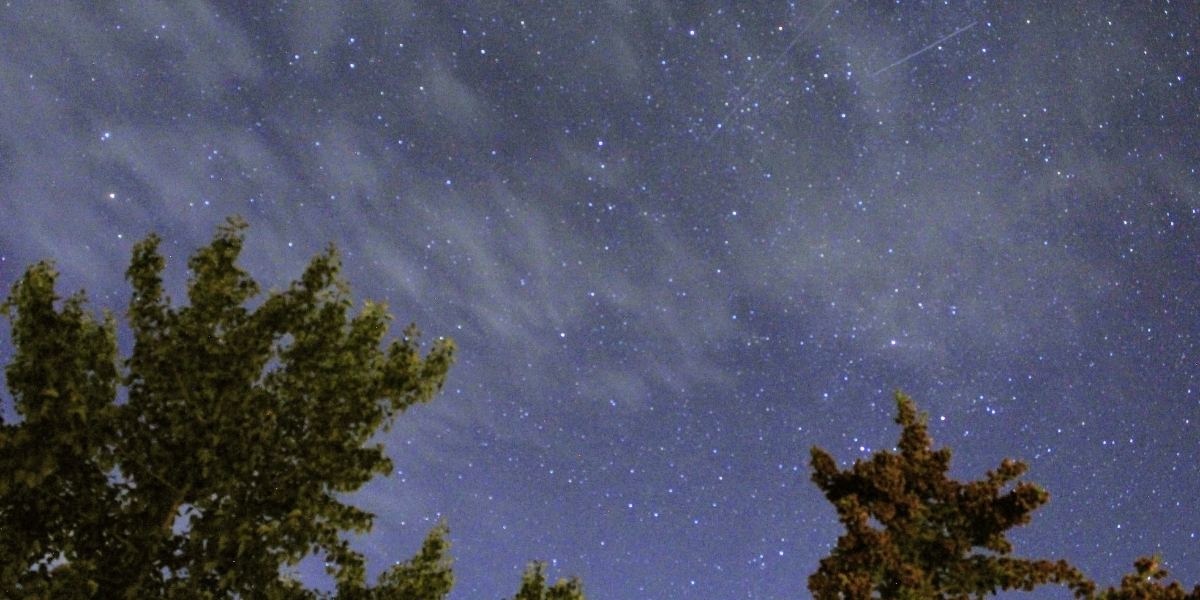
Star gazing
Why do the stars appear extra sparkly and the Milky Way so distinct in the winter versus during warmer months? The Canadian summer night sky faces into the centre of our galaxy, with billions of stars filling our view, layer upon layer, set against plumes of galactic dust at the core.
On winter nights, we face towards the outer edge of the galaxy, and stare straight into our home arm of the Milky Way contrasted with the infinite darkness of the universe. Our winter sky has less stars to look at overall, but they are clearer, brighter and incredibly awe-inspiring.
All that to say winter is the season for star gazing. Stars glitter in assorted colours and sizes, and, with some imagination, characters. Face south to trace Orion the Hunter with his bejeweled belt. On very clear nights, you can even see the sparkling curve of his drawn bow. To the right, Taurus the Bull glares with its bright orange eye Aldebaran. Look for The Pleiades (aka Seven Sisters) — a star cluster visible to the naked eye. Nearby Canis Major, the Big Dog, bounds around with Sirius, the brightest star in the night sky.
Face north to see the iconic Big Dipper, trace the outer edge of its cup up towards Polaris on the end of the Little Dipper’s handle. Cassiopeia, the big W, hangs out nearby.
There are so many constellations to become familiar with, and they provide a heavenly map for navigation, meteor showers and other sky events.
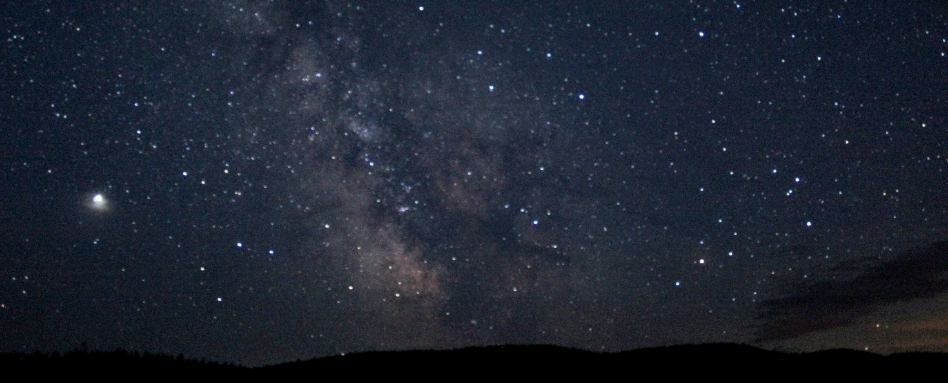
Photo credit: Sylvia Dekker
Meteor and planet gazing
The memory of lying on my sleeping pad under my first meteor shower late into in the night is a vivid one and was well worth the chill I ended up with. This winter, there are several midnight dates with nature to put in your calendar. Ursids is peaking on December 21–22 during a new moon — perfect dark sky conditions to see the streaks of light radiating from Ursa Minor, with a handful or two predicted per hour.
The Quadrantids meteor shower is predicted to have a much higher observable rate of meteors per hour. Even though the timing — right during a full moon — isn’t ideal, anyone with clear skies and out late the night of January 2 and very early in the morning of January 3, 2026, should be able to catch some of the bright ones.
If sleepiness always wins the argument over enjoying night sky events, a parade of planets starting in January are visible much earlier in the evening. Look low in the southern sky shortly after sunset to see Venus, Saturn, Jupiter, Mars, Uranus, Neptune aligned. All but two will be visible with the naked eye, but you can use a pair of binoculars to spot Uranus and Neptune.
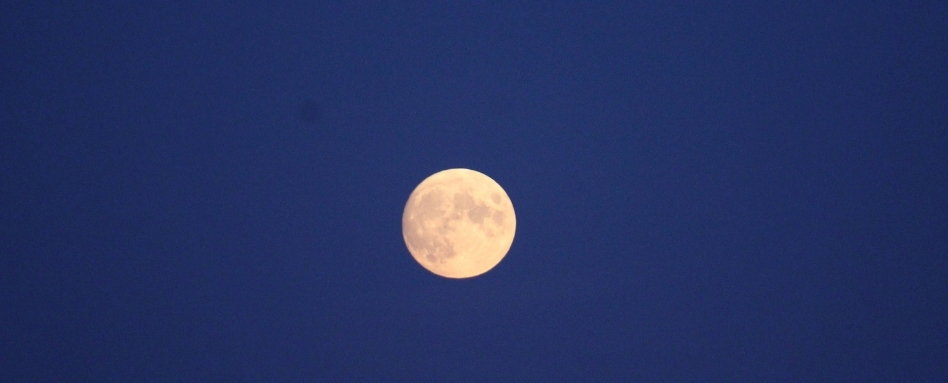
Photo credit: Sylvia Dekker
Colour gazing
With Solar Cycle 25 in its decline phases, this winter falls right during the predicted “last gasp” phenomenon, which often produces powerful eruptions creating the flickering, colourful bands of geomagnetic activity that we can’t get enough of. Dart the center of the weather, location and timing Venn diagram, and you could be in for a spectacular show. That is, if you’re outside to see it. And you should be, because we likely won’t see this breathtaking phenomenon this widespread and at this intensity for another decade. Keep an eye on space-weather forecasts: the strong coronal mass ejections that lead to the best shows often have only a day or two of lead time.
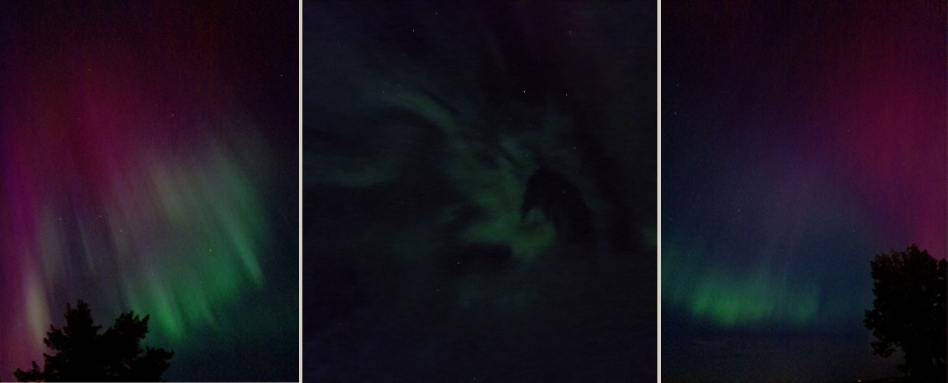
Photo credit: Sylvia Dekker
Tips for getting the most out of this winter’s sky
• Find a place away from light pollution and choose nights around new moons for nighttime sky adventures. Near me, the West Bragg Creek Trail section of the Trans Canada Trail runs straight through a dark sky area.
• Give your eyes time to adjust to the darkness. Avoid looking at your phone and once you’re in position, turn off your headlamp.
• Your eyes might love the view above, but your neck won’t appreciate being cricked upwards for prolonged periods. Find a way to recline, such as laying on a sleeping pad, to enjoy the sky to the fullest.
• It’s winter in Canada, so unless you’re lucky enough to align a Chinook wind with a notable sky event, it’ll be cold. Set up a warm camp to retreat to, plan for short periods outdoors, bundle up, use foot warmers, and nurse a hot drink while you watch the sky come alive.
Fresh air, wild places and the life they contain — from the smallest wonder to the vastest detail — are the heartbeat of Sylvia Dekker’s pen. She is a freelance writer based in a small town in the Albertan Rocky Mountain foothills and shares her love of exploring nature with her husband, three tagalongs and now, you. Find her @syl.dekker and read on at www.sylviadekker.com.
At Trans Canada Trail, we work to expand access to nature, improve visitor experience and ensure Canadians can safely enjoy outdoor spaces for generations to come. Find the trail section closest to you on our interactive map and find inspiration for more outdoor winter activities!
Main photo credit: Sylvia Dekker