
A Deep Dive into the Past at Mile Zero of the Kettle Valley Rail Trail

Trail adventures from Trans Canada Trail staff
Written by Amy Schwartz
Decades before the Trans Canada Trail was dreamed into existence, the Kettle Valley Railway operated across southern BC, running for hundreds of kilometres from near Hope — approximately 150 kilometres east of Vancouver — to Midway in Boundary Country, via Coquihalla Canyon and the Okanagan Valley. The railway passed through Rock Creek, Penticton, Princeton, and other communities en route.
The Columbia & Western Railway reached Midway in 1899, and a stationhouse was constructed in 1901. This Midway Station was the last stop of the Columbia & Western Railway. The Kettle Valley Railway started at Mile 0 in Midway.
The Kettle Valley Railway has long ceased operating. Today, the Kettle Valley Rail Trail, part of the Trans Canada Trail, is one of the most popular cycling routes in British Columbia, attracting tourists and cycling enthusiasts worldwide.
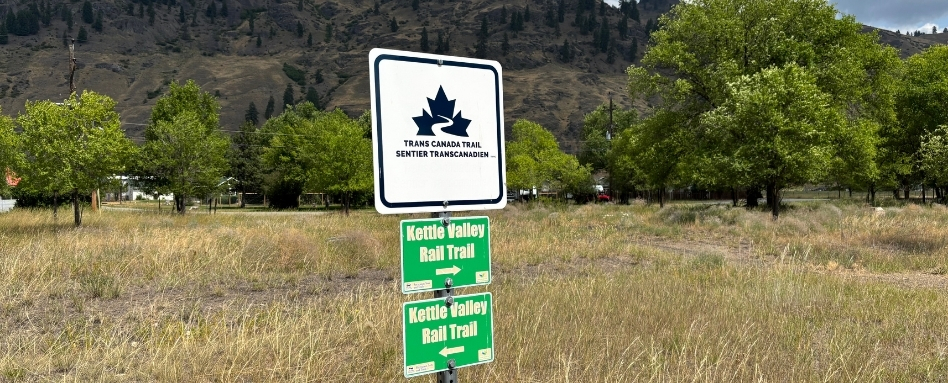
Photo credit: Amy Schwartz
A history of the railway
Built between 1910 and 1916, the Kettle Valley Railway ran from Midway to Odlum, near Hope. Branches also ran from Brodie to Spencer Bridge; Princeton to Copper Mountain; and Penticton to Osoyoos. Wendy Higashi, curator of the Kettle River Museum, explains the history of the railway: “The Kettle Valley Railway was 275 miles [442 km] long, took five years to build and cost a total amount of one million dollars.” The journey from Midway to Penticton took six hours.
The first passenger trail ran in 1915, and the railway operated until 1961, when some sections ceased operations. Eventually, due to shifting trends in travel, plus the railway’s difficult terrain and weather, the entire railway was abandoned in the 1980s.
View this post on Instagram
A visit to the Kettle River Museum
This summer, on a road trip to visit family in eastern British Columbia, my nine- and six-year-old girls and I stopped to stretch our legs and explore the Kettle River Museum in Midway. The museum’s stated mandate is to “gather and preserve information, records and objects of educational, historical and cultural value associated with the area,” and it’s jam-packed with historical artifacts, memorabilia and portraits of life in Boundary Country from time past.
“The Kettle River Museum is an interactive educational museum, and a fun experience for all ages. The site is a travel destination worth visiting,” Wendy says.
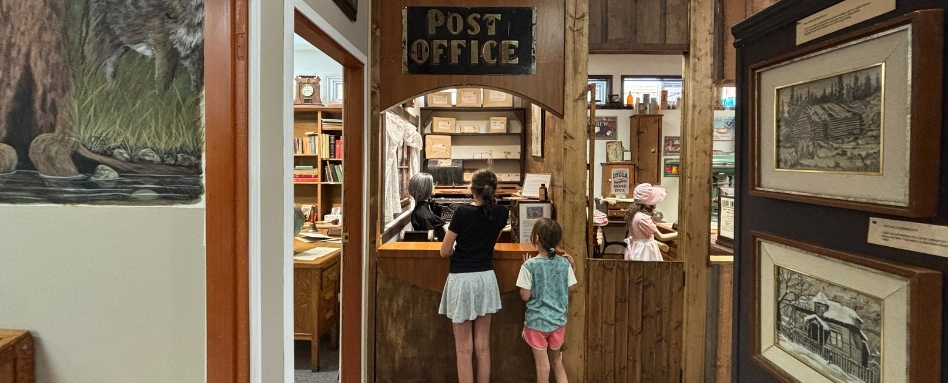
Photo credit: Amy Schwartz
Midway Stationhouse, a general store, a police station… and a real caboose!
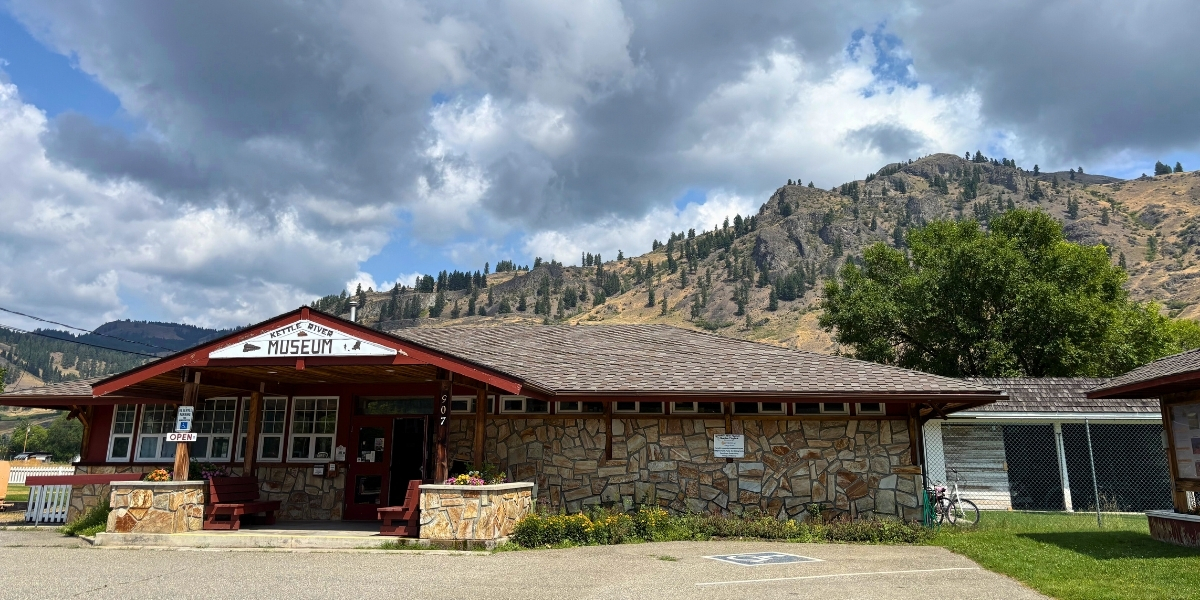
Situated at Mile Zero of the Kettle Valley Rail Trail, the museum is home to the original CPR Standard No. 5 Station in Midway, built in 1909, which currently houses exhibits commemorating the steam railway era of southern BC; a Canadian Pacific Railway caboose; a look at staff quarters; a provincial police room complete with WANTED posters; and homes, stores, and other exhibits that draw you into a different era.
The kids’ highlights: the caboose, of course! Plus, the re-created waiting room, which features a ticket booth, benches, posters and timetables, and audio cues to let you know when the train is coming in. The family’s home, located upstairs in the station house, was another big hit. Not to mention the player piano, which spurred a conversation (and a little dance from our resident dance enthusiast) about music from the time.
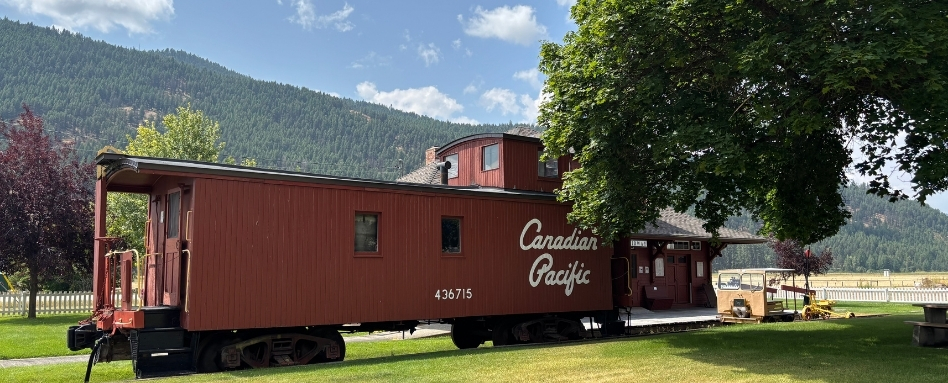
Photo credit: Amy Schwartz
Examining the history of internment camps in BC’s Interior
The museum’s exhibits about the region’s history do not shy away from some of the problematic elements of BC’s history – notably, the history of the forced relocation of tens of thousands of people of Japanese Canadian origin, who were moved into internment camps in the Kootenay and Boundary regions, primarily away from the coast, during World War II. Several former internment camps are still standing in the area and offer a portrait of the bleak conditions for internees, many of whom braved the Kootenay winter in uninsulated spaces.
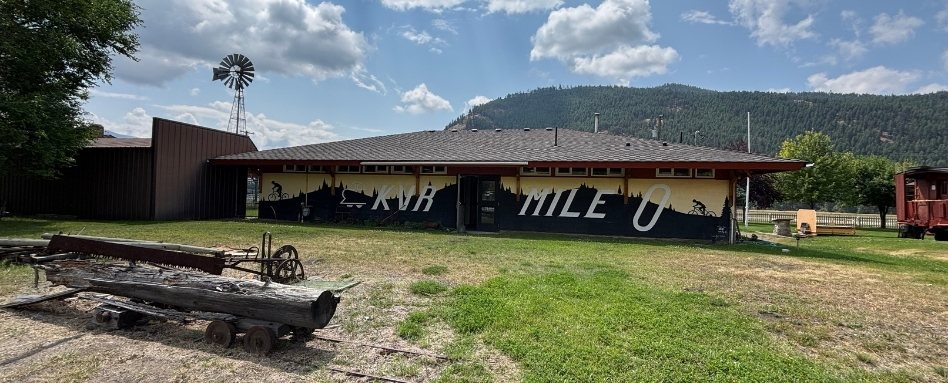
Photo credit: Amy Schwartz
Steps from the Kettle Valley Rail Trail
The Kettle River Museum is steps — literal steps, maybe 25 of them — to the Kettle Valley Rail Trail and is a frequent stop for cyclists and passersby. We headed outside to walk on the trail and talk about the history of the railway — and how trails have popped up in the place of decommissioned railways in several parts of Canada, including along the Trans Canada Trail.
Overall, we had a great visit. The museum staff was very friendly and informative, and took the time to guide us through exhibits, answering dozens of questions along the way while keeping the kids engaged. It made for a wonderful — and educational — stop on our trip, with plenty of food for thought.
Find out more about the Kettle River Museum in Midway.
Explore the Kettle Valley Rail Trail on our interactive map.
Main photo credit: Amy Schwartz