
Gemma’s Trans Canada Trail: Exploring the Othello Tunnels

Written by Gemma Taylor
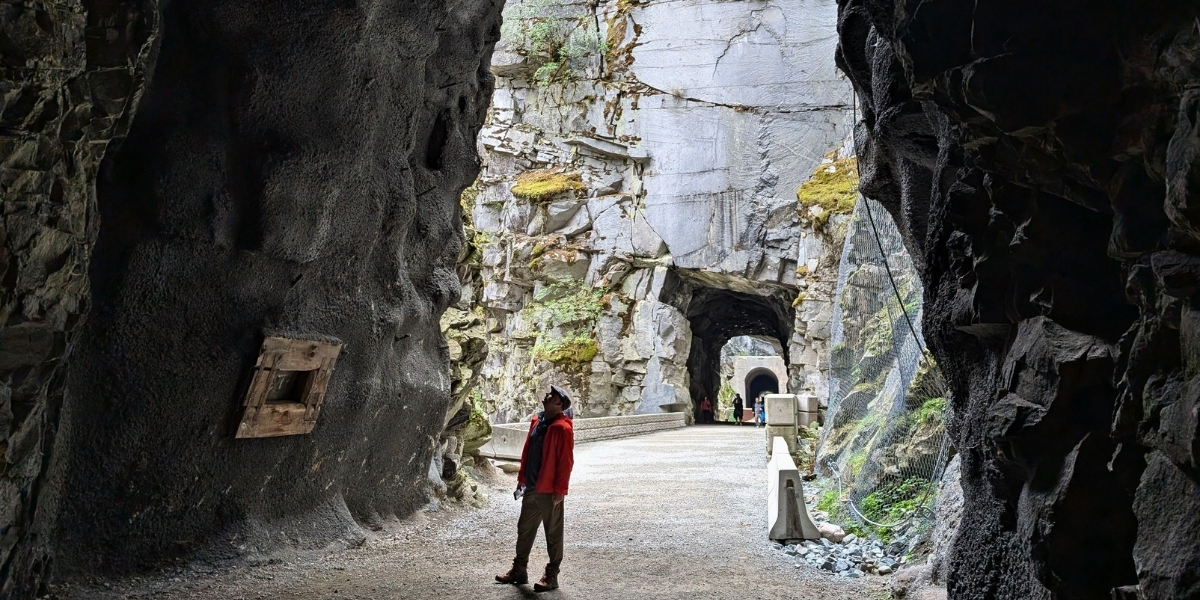
Just outside Hope, British Columbia, the Trans Canada Trail threads its way through the steep Coquihalla Canyon with the help of the Othello Tunnels. With a blend of historic engineering and dramatic scenery, this section of the Trail is both remarkable and memorable. I find myself returning time and again, especially because it’s so easy to access.
The Othello Tunnels comprise a series of four carved granite passages, located above the turquoise-coloured Coquihalla River and surrounded by steep, moss-covered rock walls. A wide, flat path with several bridges connects the tunnels, offering multiple viewpoints of the impressively deep gorge and the rushing river below.
A series of tunnels forged directly through the canyon
The tunnels were built in 1914 as part of the Kettle Valley Railway, which stretched 500 kilometres from Hope to Midway. The Coquihalla Canyon was considered one of the biggest obstacles along the intended route. Rather than construct a bypass tunnel, chief engineer Andrew McCulloch chose to cut a series of tunnels directly through the gorge.
Most of the tunnels were built by hand by European immigrants and American contractors. They used gunpowder to blast through the rock and then picks and shovels to excavate the tunnels. At $300,000, this stretch was the most expensive mile of railway constructed anywhere in the world at the time. Adjusted for inflation, that’s almost $10 million today. Despite the exorbitant cost, this section of the KVR was abandoned in 1961 and became a provincial recreation area in the 1980s.
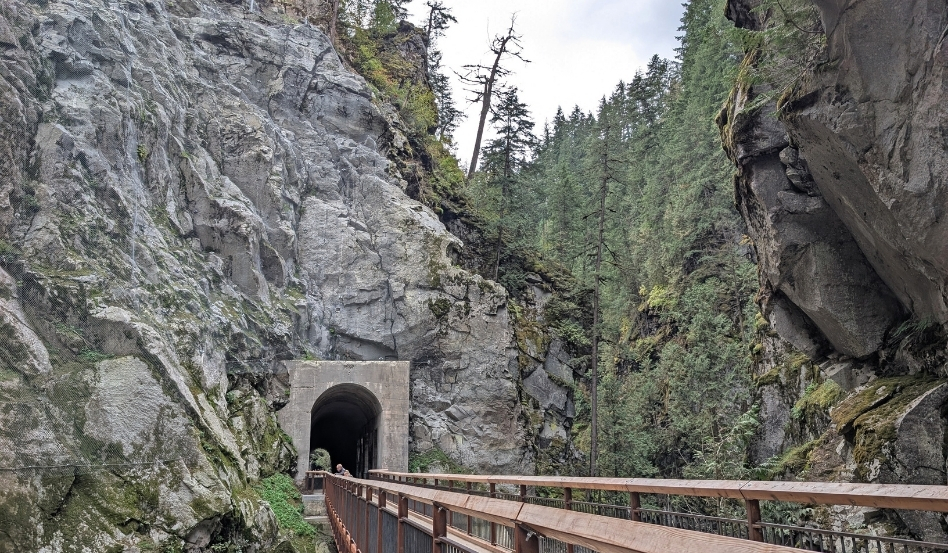
Photo credit: Gemma Taylor, Off Track Travel
The unusual name given to the Othello Tunnels comes from McCulloch’s love of Shakespeare. Many of the stations on this section of the KVR were inspired by some of the Bard’s most famous characters, including “Juliet,” “Romeo,” “Portia” and “Lear.” For the tunnels, the tragic hero of Othello was chosen.
Technically, the official full name is the Othello-Quintette Tunnels. While quintette is derived from the Latin word for “fifth,” there are, however, only four tunnels. The third tunnel includes a windowed section that creates the illusion of an additional tunnel.
An ideal British Columbia road trip stop between the Coast and the Interior
The ideal day trip destination for many residents on the Lower Mainland, the Othello Tunnels are also a popular road trip stop when travelling to and from BC’s Interior region. Beyond the convenient location, I find that the Othello Tunnels are the perfect showcase of the Trans Canada Trail experience — a place where nature, cultural heritage and accessibility come together.
Most visitors walk through the tunnels and then return to the parking area via the same route. The round-trip distance is 2.6 kilometres, which usually takes around an hour for most visitors to walk. The tunnels range in length from 30 to 170 metres. The tunnel walls and ceiling show where the rock was painstakingly chipped away by hand.
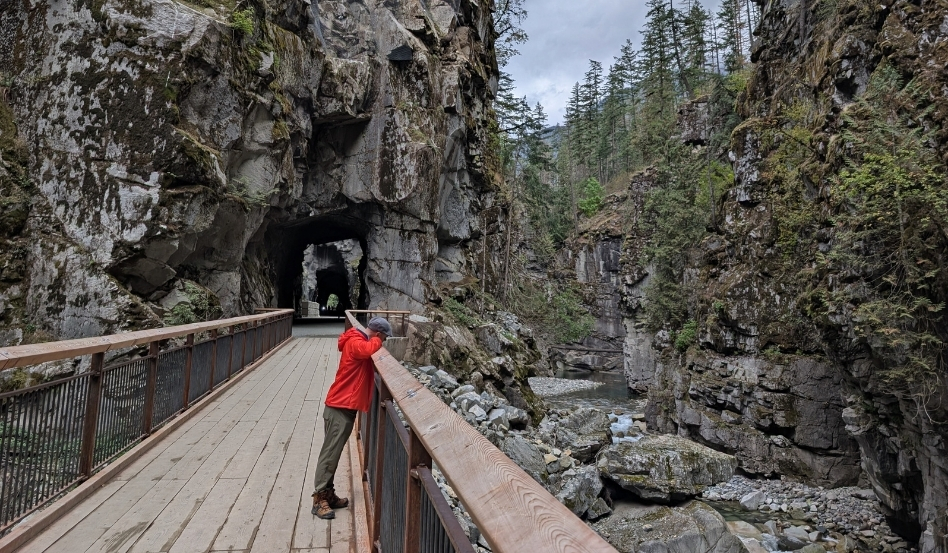
Photo credit: Gemma Taylor, Off Track Travel
A railway trestle, waterfalls and more
There are two wooden bridges, one still with the old railway trestle visible underneath. The bridges offer a great vantage point of the river below, flowing with a mix of rushing rapids and deep, clear pools. In October, salmon fight their way against the current to spawn upstream.
After being severely impacted by flooding in 2021, the Othello Tunnels have seen significant repairs and reconstruction. The recovery plan included structural repairs, trail restoration and safety upgrades to ensure that the tunnels can continue to be enjoyed for years to come.
By October 2025, all four tunnels were ready for visitors to explore again. Just by chance, I managed to visit the day after the reopening. It felt so special to see this treasured spot back to its former glory. Thanks to upgrades designed to endure future extreme weather, these historical passageways are looking better than ever.
Othello Tunnels visiting tips:
• This section of the Trans Canada Trail is usually open from May to the end of October. The tunnels close in the winter due to the risk of falling rock and ice.
• Although tempting on a hot day, swimming is not permitted in the river. The rapid currents are powerful and unpredictable.
• The tunnels are busiest on the weekends and between 10 a.m. and 4 p.m. on summer weekdays. Try to visit early or late for a quieter experience
• A flashlight is helpful for the longer tunnels as they are quite dark in the middle, and the walking surface can be a little uneven in places.
• The path leading to the tunnels is wide and level, with a firm, compacted gravel surface that makes it accessible for manual wheelchairs and strollers. There are accessible parking spots and outhouses.
• BC Parks requests cyclists to dismount when travelling through the tunnels.
• Dogs are permitted on leash.
• To hike a loop, combine the Othello Tunnels with the Hope-Nicola Valley Trail (also part of the Trans Canada Trail). The route is 5.6 kilometres total.
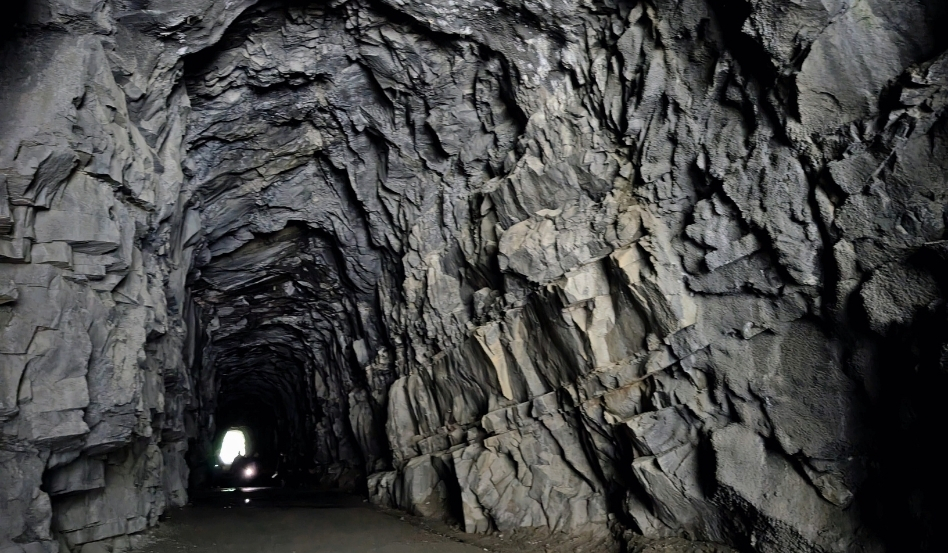
Photo credit: Gemma Taylor, Off Track Travel
Gemma Taylor is an outdoor adventure travel blogger based in Penticton, British Columbia. Happiest on the trails or with a canoe paddle in her hand, Gemma simply loves to be outside, the further off the beaten path the better! Visit Off Track Travel for detailed adventure guides, road trip itineraries and to learn more about hiking in BC’s Okanagan Valley and elsewhere in Canada.
About Trans Canada Trail’s Climate Sustainability and Nature Program
Trails have become increasingly impacted by extreme weather and other effects of climate change. Trans Canada Trail helps communities protect, restore and future-proof Canada’s nationwide trail system by focusing on nature-based solutions, like tree planting and invasive species removal, and offering supports for designing, adapting and building sustainable trails. We work with partners across the country to keep trails safe and resilient for today and future generations.
Learn more about the Climate Sustainability and Nature Program here.
Main photo credit: Gemma Taylor, Off Track Travel