
How Our Projects Support Safer, More Sustainable Adventures on the Trans Canada Trail

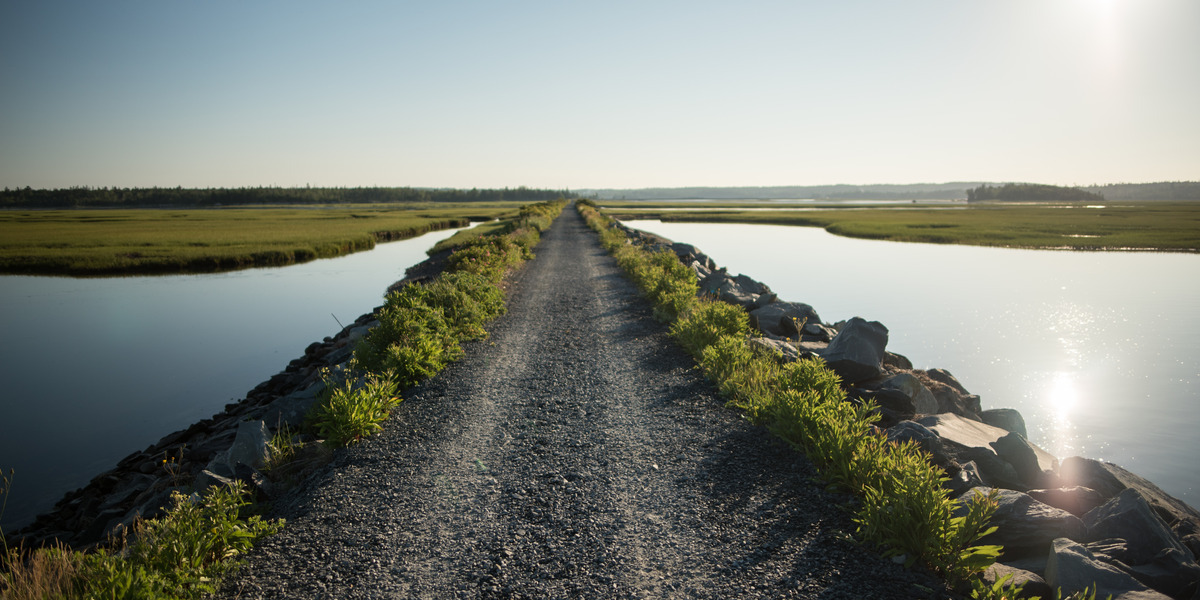
As the world’s longest multi-use trail network, the Trans Canada Trail is an iconic shared national asset, spanning from coast to coast to coast. Every day, it helps people connect with their communities and create lifelong memories together. Every year, it attracts over 200 million visitors that support 221,000 jobs.
Our projects that develop new Trail sections, facilitate urgent repairs and install wayfinding signage have been essential to this success. Discover how some of these projects – supported by funding from the Government of Canada – have made the Trail safer and more resilient for generations to come.
Developing a safe active transportation route in Stanley, Manitoba
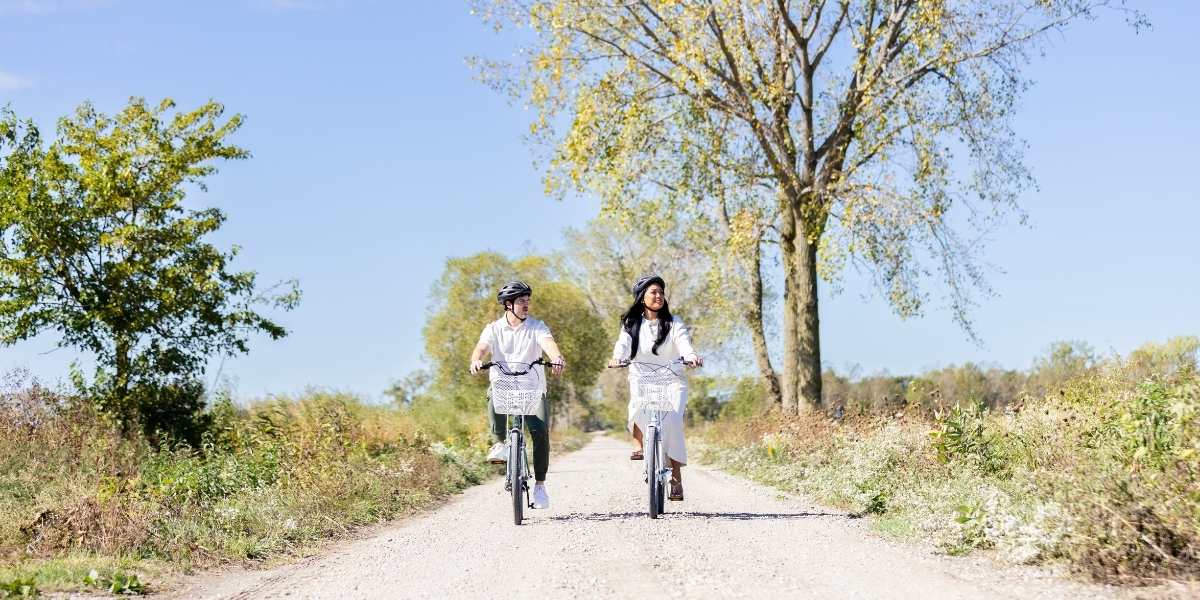
For many years, the dream of a non-motorized path between Winkler and Morden in Manitoba seemed distant. Thanks to a grant from Trans Canada Trail, combined with support from local municipalities and funding partners, it is now a reality.
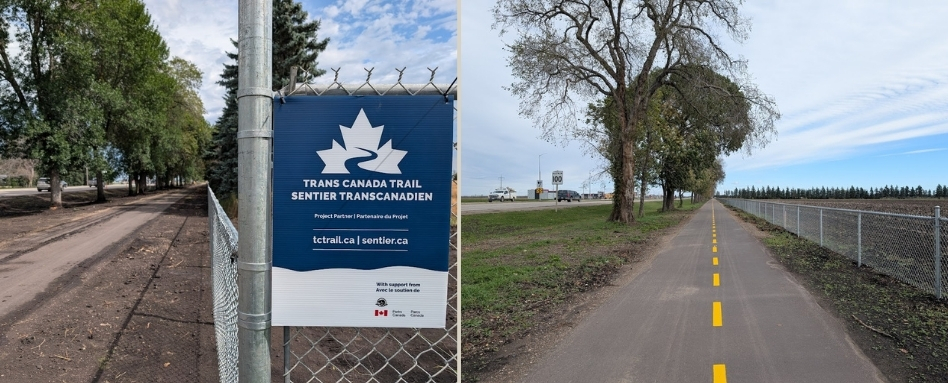
Winding through the beautiful Pembina Valley, the 10-kilometre Stanley Community Pathway connects these two cities as well as recreation areas and amenities. Smooth, safe and separate from a nearby highway, this Trail section is already a popular destination for everyone seeking new ways to stay active and access services.
Sections of the Trail like Stanley Community Pathway help communities stay connected, embrace active living and make lifelong memories.
Protecting trails from wildfires in rural Newfoundland
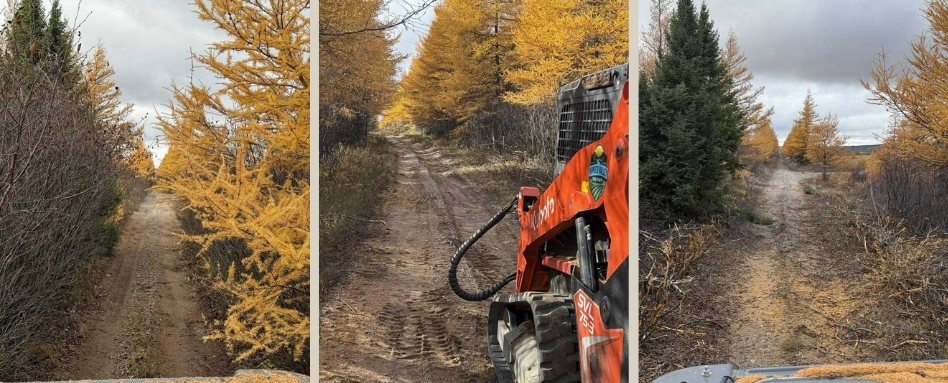
One of our Climate Smart Trails pilot projects took place in the Gaff Topsails, a remote and striking section of the Newfoundland T’Railway between Badger and Howley.
Like many parts of Canada, this region has been experiencing increasing wildfires risk. In recent years, wildfires resulted in provincial fire bans and restricted access to the woods, highlighting the need for a different approach to trail management.
In response, we partnered with Newfoundland T’Railway Association to test an innovative, low-cost method of managing vegetation along a 100-kilometre section of the Trail. Rather than waiting decades for dense alder growth to require expensive clearing and removal, the project used a skid steer and flail mower to mulch vegetation as part of regular, ongoing maintenance.
This approach aligns with Fire Smart principles by reducing woody fuel loads and lowering wildfire risk. At the same time, it supports a healthier trail corridor by encouraging native grasses and reducing erosion.
This project demonstrates a practical, scalable approach that other trail operators across Canada can adapt as wildfires continue to increase.
Repairing significant damage in British Columbia
When a violent windstorm caused severe damage on the Trail between Castlegar and Nelson, British Columbia, a rapid response was needed.
With support from our Disaster Relief Fund, the Nelson Cycling Club cleared the path and restored access. This involved removing dangerous fallen trees, clearing blowdown and debris and repairing trail surfaces.
Thanks to this intervention, locals and visitors could once again explore the mountainous West Kootenays. Through projects like this one, the Trail safeguards access to some of Canada’s most beautiful regions.
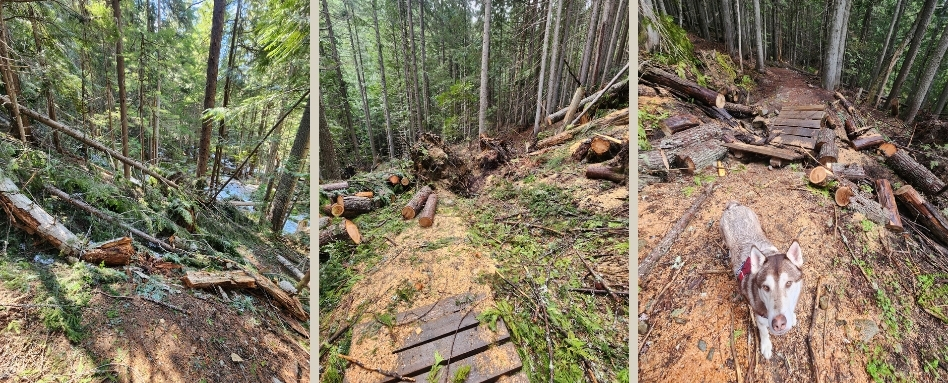
Photo credit: Nelson Cycling Club
Replacing an aging pedestrian bridge on the Niagara Peninsula
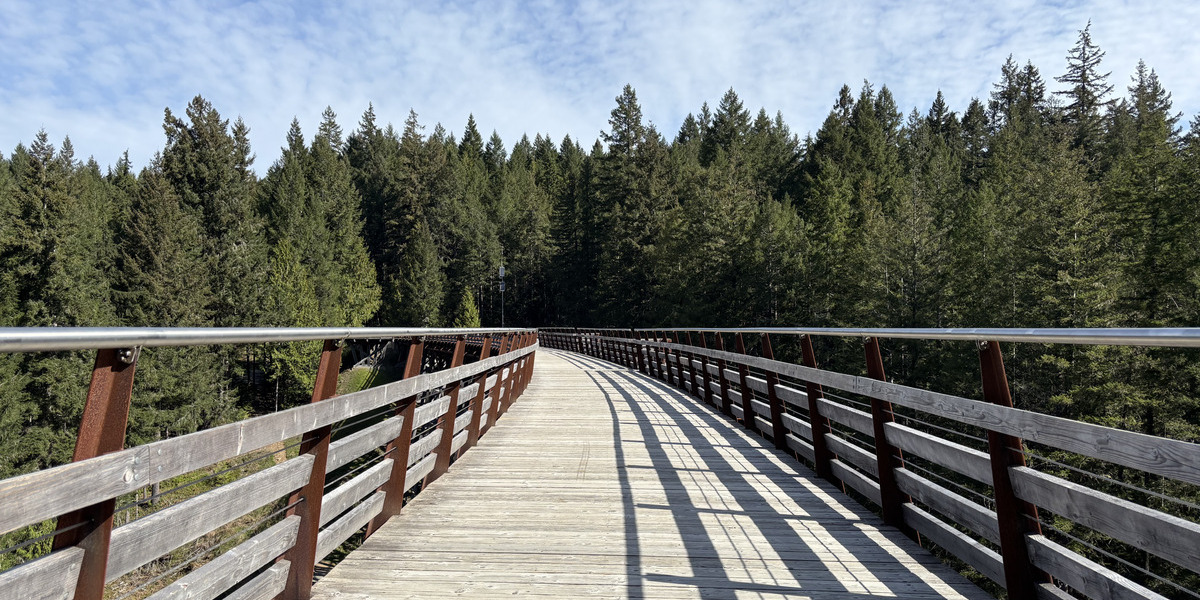
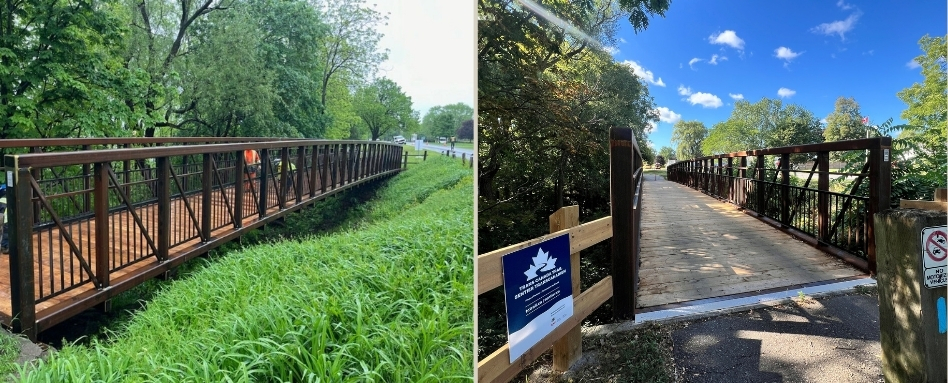
Allowing cyclists and pedestrians to easily explore Ontario’s Niagara region, bridges play a critical role on the Niagara River Recreation Trail. When one bridge fell into disrepair, local trail managers acted quickly replace it.
With funding support from Trans Canada Trail, Niagara Parks Commission installed a modern and sturdy bridge in its place. In addition, they repaved approaches on both sides of the bridge, ensuring a safer experience.
With the help of infrastructure projects, the Trail is consistently made safer and kept open across Canada.
Making existing pathways safer and smoother in Cochrane, Alberta
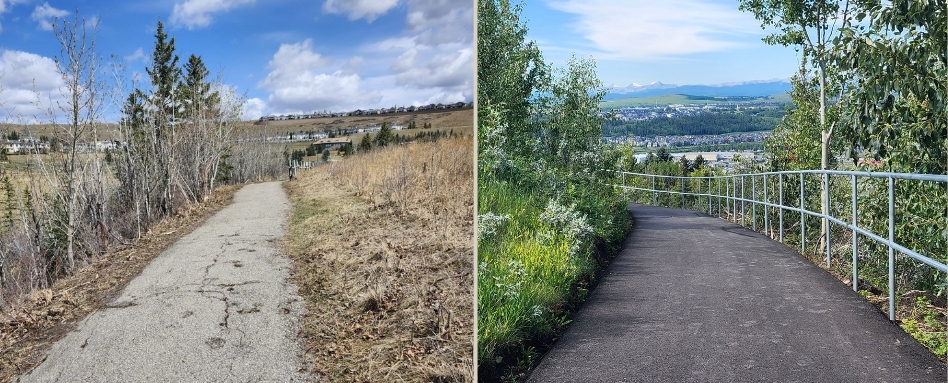
After tree roots grew through paving in Cochrane, the Trail in the community became uneven and unstable. After receiving funding for trail enhancement, local trail managers worked quickly to repave 220 metres of pathway and 90 metres of guardrail, and install root barriers where required.
In addition, a guardrail was added along the edges of the Trail to protect users from a steep ravine. These measures created a more enjoyable experience, allowing visitors to safely take in the gorgeous views of the Bow River in the neighbourhood of GlenEagles.
Enhancement projects like this one ensure the Trail continues to offer awe-inspiring adventures in Alberta and across Canada.
When a Trail isn’t just a Trail
Canada’s national trail is a unifying, widely used public space that connects communities, supports our health and builds environmental resilience.
However, without a renewed federal funding commitment, parts of the Trail could deteriorate due to climate impacts, aging infrastructure and rising maintenance costs.
To ensure the Trail continues to deliver benefits across Canada, we need everyone to speak up. Make your voice heard through our Not Just a Trail campaign, which makes it easy toa send a letter to your Member of Parliament.
For more information on the Trail’s impact, read our latest Annual Report.
Main photo credit: Daniel Baylis