
Tasha’s Trans Canada Trail: I Used to Measure Hikes in Kilometres

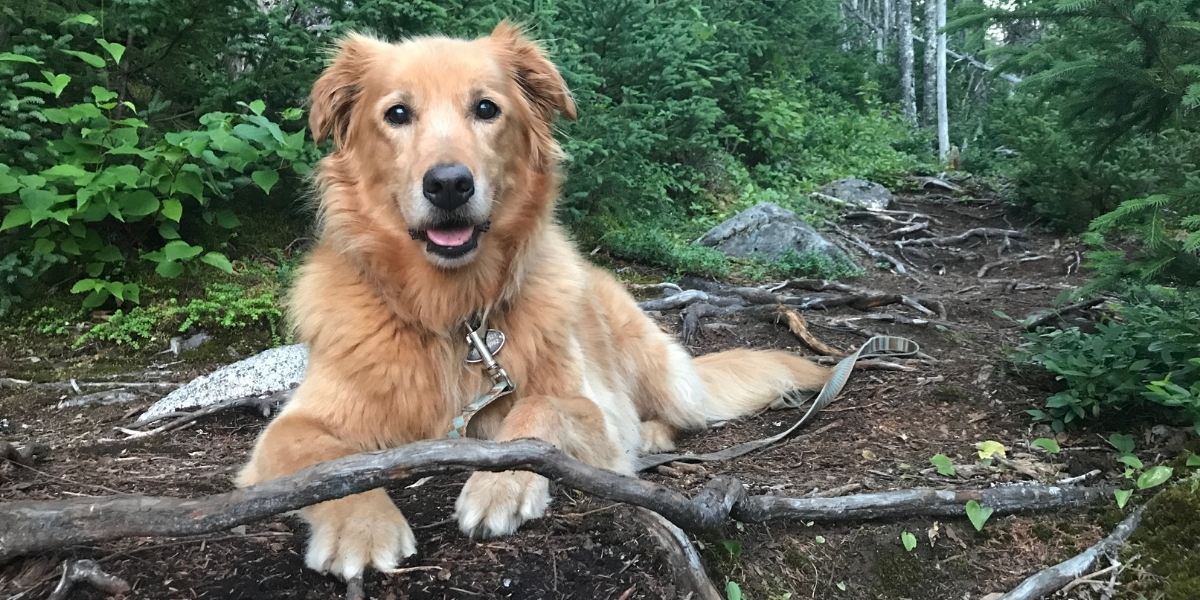
What exploring with my senior dog taught me about identity, resilience, and rebuilding on the Trail
Written by Tasha Ryland
I used to measure hikes in kilometres.“This one is about 4.5 kilometres each way,” or “That section is 7 kilometres with a 3-kilometre gravel road.” I measured each adventure in numbers, elevation gains and how tired my legs felt at the end of the day.
Growing up in the Labrador Straits, distance was always part of the plan. Roads and trails weren’t paved or clearly marked. I watched my father navigate his way across the Labrador Barrens without a compass or a map, and I learned to do the same. The Pioneer Footpath, once the only means of travel for 150+ years, contours the rugged coastline I was born and raised on. My dog, Jake, and I would hike to Schooner Cove as kids, sometimes onward to the Point Amour Lighthouse if we had the time. Jake would run ahead, tail high, stopping every so often to make sure I was still coming. I was thinking of how far we still had to go while he was just happy to be there beside me with his nose in the wind.
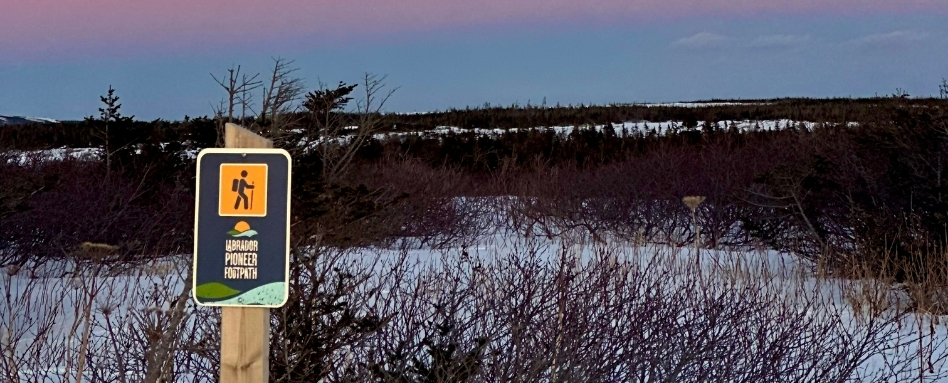
Photo credit: Tasha Ryland
The East Coast Trail became part of our routine
When I moved to St. John’s for school and work, Jake came with me. The East Coast Trail became part of our routine, no matter the season outside or the season of my life. I’d file away information about the trail: “Cape Spear was nearly 10 kilometres to Maddox Cove, 20 if we went out and back.” I crossed off the more “difficult”-rated hikes as a sense of accomplishment. If it was long or steep or demanding enough, it felt like something I could be proud of.
Then the ground shifted. The year I lost my dad, I covered more of the Trail than ever. I chose longer routes and steeper inclines with an urgency that only grief can give you. The kilometres felt like proof I was still moving forward. Over the years, I met others walking for similar reasons; reasons that don’t show up on your fitness-tracking app. A widow hiking for her husband every Sunday morning. Someone training for an ultramarathon after paralysis. Friends who said they just needed “fresh air” when what they really needed was space to breathe and talk it out. The trail was filled with people rebuilding in their own ways.
Photo credit: Tasha Ryland
I enjoyed just being out there with him
Somewhere in between the grief and the miles, I began to notice Jake’s pauses. He rested on inclines that didn’t typically slow him down and often chose to walk beside me rather than a couple steps ahead, doing his usual look-backs. I knew what those cues meant about his abilities, but still I found myself grateful for the pauses. Deep down, I knew I was pushing limits and miles to outrun something I couldn’t name, and, without even trying, Jake was reminding me to slow down. In 2021, I packed up my life and drove across the country to British Columbia for work. Jake was in the back seat as he’d always been; the kilometres didn’t matter as long as we were moving together.
The Atlantic coast became the Pacific coast, but our routines stayed the same. We found new coastal trails. The distances slowly stopped mattering to me. Instead, I enjoyed just being out there with him, watching him intently for cues on when it was time for us to leave. Jake got older, and the trails got shorter, but we didn’t stop adventuring together. We just adapted to the changes. I chose routes with less elevation and shorter mileage. More time spent sitting along the cliffs.
Watching him adjust without complaint made it harder for me to ignore the things and changes in my life I was avoiding. Outings became more intentional as our years in the West Coast sunshine passed by. We were no longer crushing 10-kilometre hikes, but it still felt like more than enough. I think for the first time, my idea of a “successful” hike wasn’t about elevation or stats anymore. It was him hopping into the backseat, tired and content. It was me feeling tired and content, too.
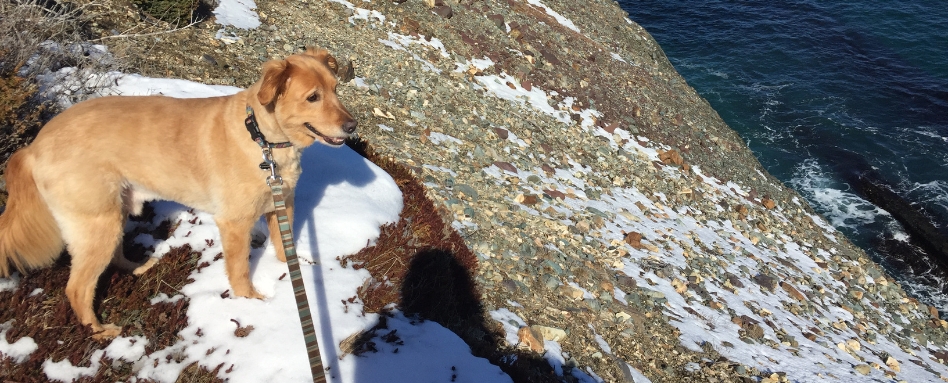
Photo credit: Tasha Ryland
I turned to the trails for comfort
Eventually we found ourselves back home on the Labrador Straits. After years away, the trails still felt familiar, but I walked them differently. I turned to the Pioneer Footpath for comfort while bracing myself for the loss of my adventure buddy. In his last season, at the beautiful age of 18.5 years young, I pulled my sweet Jake in a little green wagon along stretches of the Footpath we had once covered on foot. For one last time, he got those paws muddy and dipped his feet into the Atlantic. After we said goodbye, I returned to the trails again for comfort. I needed somewhere I could just keep moving.
When I look back on those years of stacked moments on the trails with Jake, I hardly remember the kilometres. I just think about him overlooking the cliffs in Torbay along the Silver Mine Head Path and how proud he looked covered in mud after we hiked the Cape Spear Path with friends. I remember the snacks, the laughs, the water breaks, and the muddy paws.
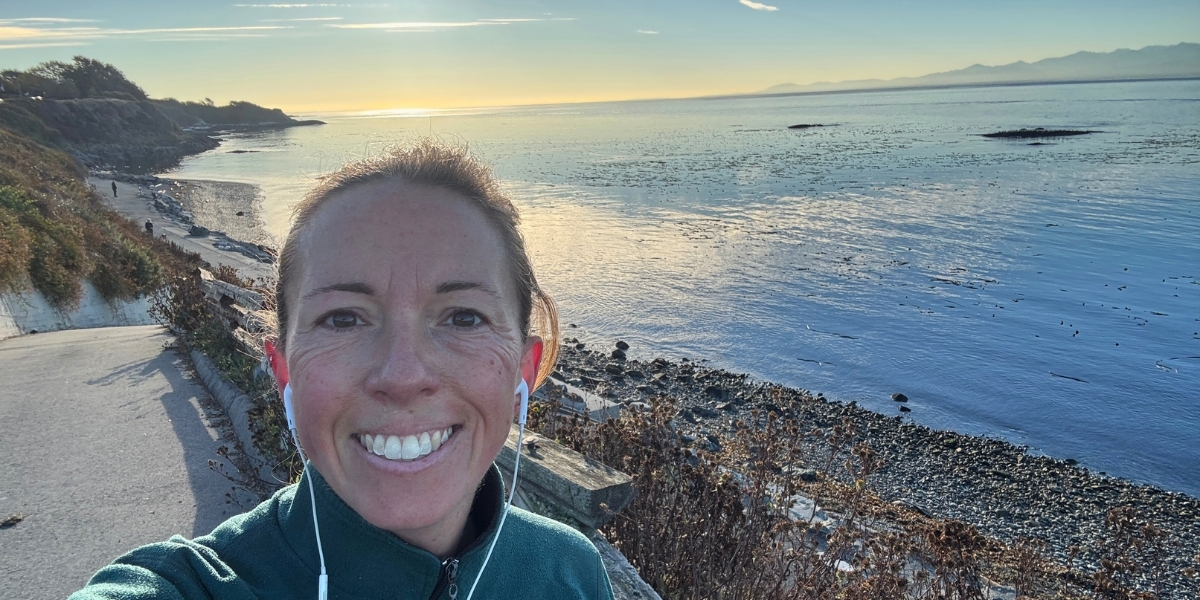
I lace up for a run along beautiful Dallas Road. I’m alone this time, and instead of counting distance, I think of the last trip I took with Jake to Victoria and how we watched the sun fade on the same stretch of coastline. I used to measure hikes in kilometres. I guess at the time it felt like proof of something special. Now, I measure hikes in deep breaths, muddy boots and goofy smiles on the camera roll. I think of the way Jake kept wagging his tail even when the incline got harder. He slowed when he needed to and kept going happily along at his own pace. Somewhere along the way, I stopped trying to outrun everything, too.
These days, if I come home with a smile, feeling a little less heavy and a little more muddy, that’s a successful day on the trails to me.
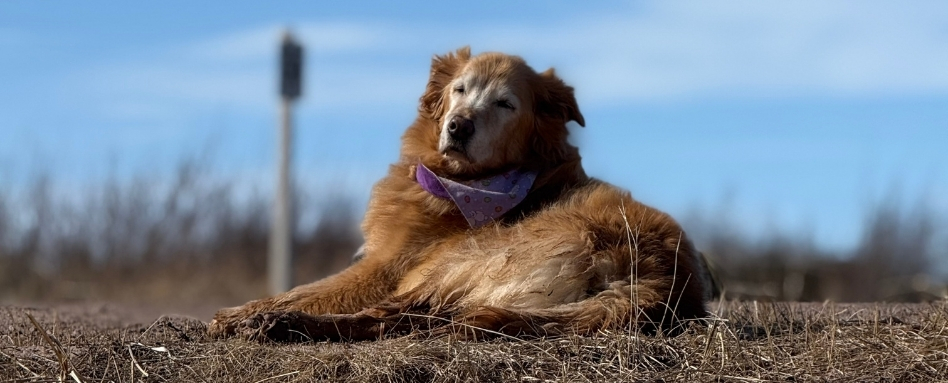
Photo credit: Tasha Ryland
Tasha Ryland is a travel nurse and outdoor storyteller originally from the Labrador Straits. She spends her time exploring coastal trails across Canada and reflecting on identity, resilience, and life outdoors. Much of her work has been shaped by adventures with her senior dog, Jake.
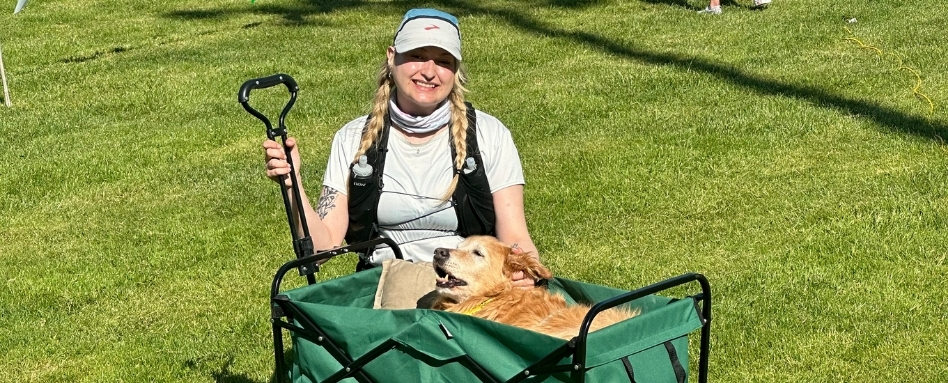
Photo credit: Tasha Ryland
About Trans Canada Trail
At Trans Canada Trail, we work to make it easier for people to discover and explore Canada’s diverse landscapes and communities by increasing trail usage and support, enhancing health and well-being, fostering community connections, and inspiring greater public engagement and support for trails.
Learn more about how you can support the Trans Canada Trail’s impactful work – and help enhance trail experiences – from coast to coast to coast.
Main photo credit: Tasha Ryland