
Gemma’s Trans Canada Trail: Exploring the Myra Canyon

Written by Gemma Taylor
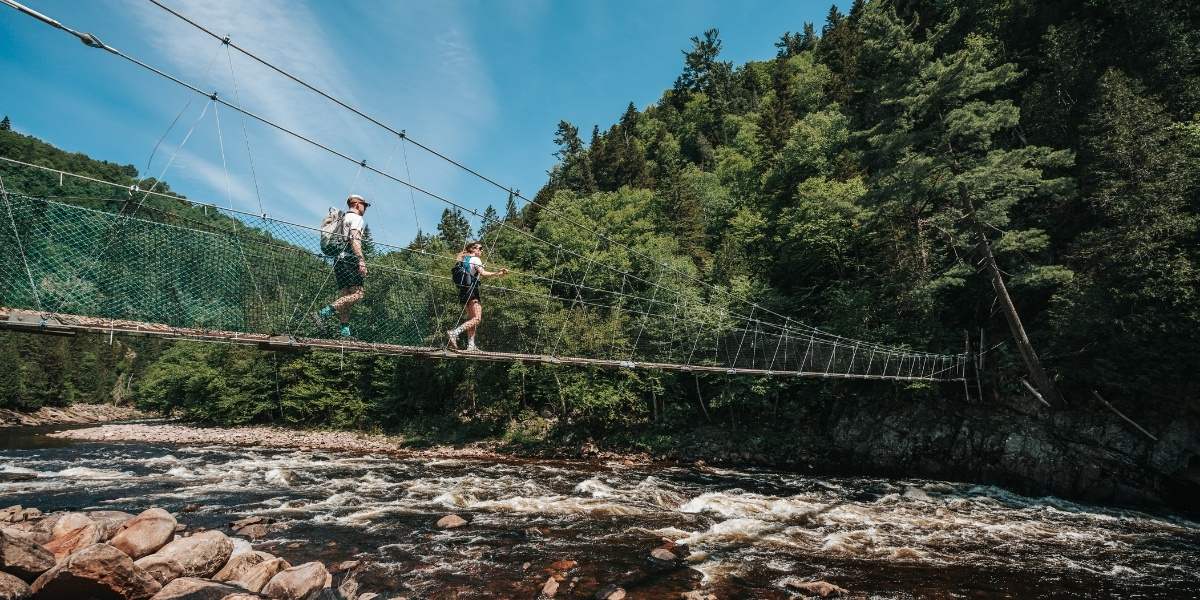
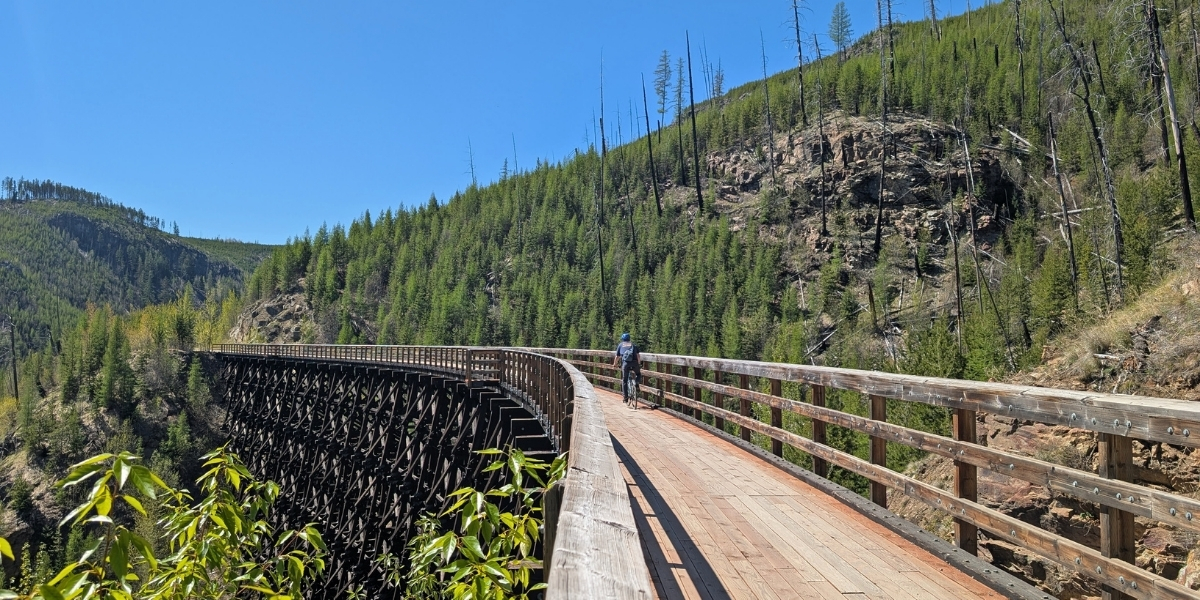
More than a century ago, 18 towering wooden trestles were built to carry steam trains around the 200-metre-deep Myra Canyon on the Kettle Valley Railway (KVR) in British Columbia’s Okanagan Valley. Today, this former railway route lives on as a multi-use trail for hikers and cyclists as part of the Trans Canada Trail.
While these huge wooden bridges are the most visible reminders of the railway, they tell only part of the story. Behind the bridges lies a history involving thousands of labourers, Canada’s push to assert its sovereignty and an unlikely connection to the Manhattan Project.
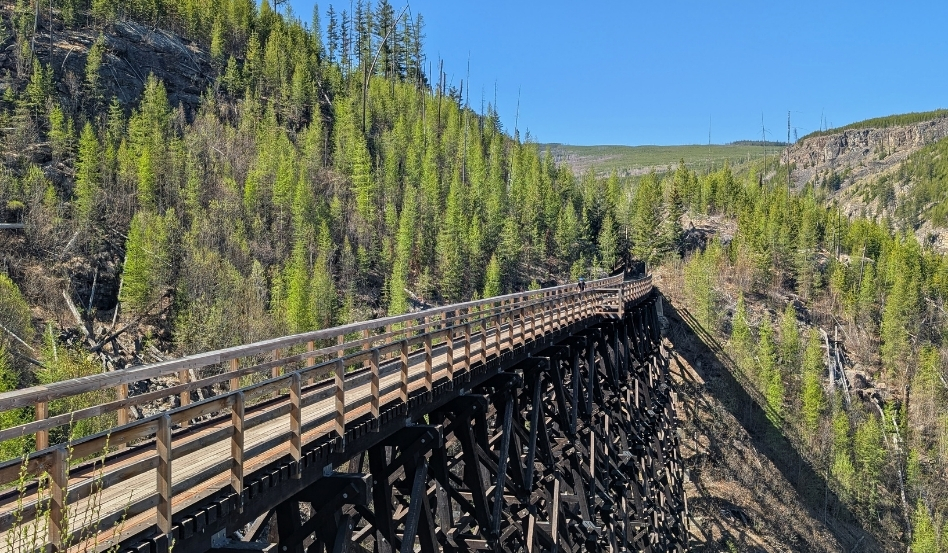
Photo credit: Off Track Travel
The Myra Canyon Explorer interpretive guide
A new Myra Canyon Explorer interpretive guide, created by Friends of the South Slopes (FOSS) with funding from the Trans Canada Trail and BC Parks, offers a deeper look at the people, engineering and history that define these extraordinary trestles. As an Okanagan local and frequent visitor to the canyon, the guide made me realize that while I thought I knew the trail well, I knew far less about the stories that shaped it.
The Kettle Valley Railway (KVR) started construction in 1910, with the completed route connecting Midway to Hope via Penticton. At a time when American miners were arriving into the area in growing numbers, the railway aimed to connect communities, transport goods and reinforce Canadian control in the area.
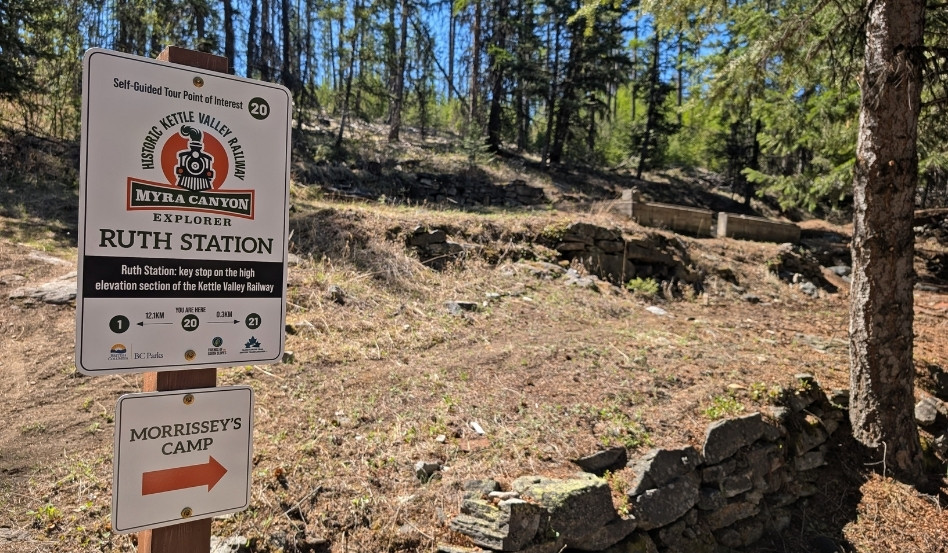
Photo credit: Off Track Travel
18 trestles and 2 tunnels over 12 kilometres
Myra Canyon was one of the KVR’s most challenging sections to build, requiring 18 trestles and two tunnels to navigate the deep, narrow gorge. At its busiest, the project employed around 2,000 workers, mostly from Europe, who lived in camps along the canyon. While the railway proved successful in securing Canada’s borders and moving products around the region, the KVR started to be decommissioned in the 1960s. The last train passed through Myra Canyon in 1973.
Today, the former railway corridor has a very different purpose. Myra Canyon is one of the Okanagan Valley’s most popular attractions, drawing hikers and cyclists to its scenic views and historic trestles. The 24-kilometre return route from Myra Station can be cycled in around two to four hours, crossing all eighteen trestles and two tunnels. The gentle gradient of the old railway and wide, well-maintained path make it accessible to a range of visitors.
It’s easy to take this trail for granted, but the trestles came close to being lost multiple times. Their survival owes much to the work of local volunteers with the Myra Canyon Trestle Restoration Society (MCTRS), who helped restore the railbed in the 1990s and advocated for the trestles to be protected within Myra-Bellevue Provincial Park. The group also helped secure provincial and federal funding to restore the 12 trestles damaged by the 2003 wildfire.
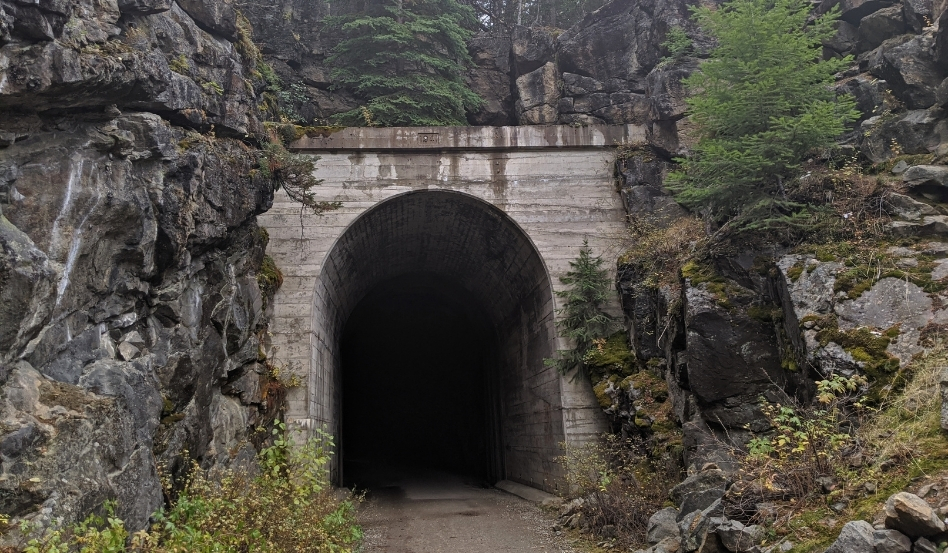
Photo credit: Off Track Travel
Friends of the South Slopes
Building on the legacy of the MCTRS, the Friends of the South Slopes group has taken on an important role in both caring for the trail and helping visitors better understand the history around the trestles. The free Myra Canyon Explorer self-guided tour highlights 21 points of interest along the trail, sharing stories and landmarks from the construction and operation of the Kettle Valley Railway, as well as the people and communities connected to its history.
One of the first things the guide made me reconsider was the Myra Station trailhead. Named after the daughter of a track foreman, the parking area was once a transshipment point for a logging operation, where logs were brought in before being shipped onward to the Penticton Sawmill Company. It’s a small thing but something I never thought about before. Even the little “viewpoints” built into the trestles have a story: they were actually water barrel platforms, installed because sparks from steam locomotives could ignite the wooden timbers.
Anderson’s Tunnel was another place I’d never paid much attention to. Marked simply with “1941” on its concrete entrance, it’s easy to walk or cycle past without wondering why the date is there. The tunnel was reinforced by the Canadian Pacific Railway during the Second World War due to concerns about unstable rock and potential sabotage. The railway carried important wartime materials, including lead and zinc used for ammunition, as well as heavy water from Trail, BC, which was shipped to the US for the Manhattan Project.
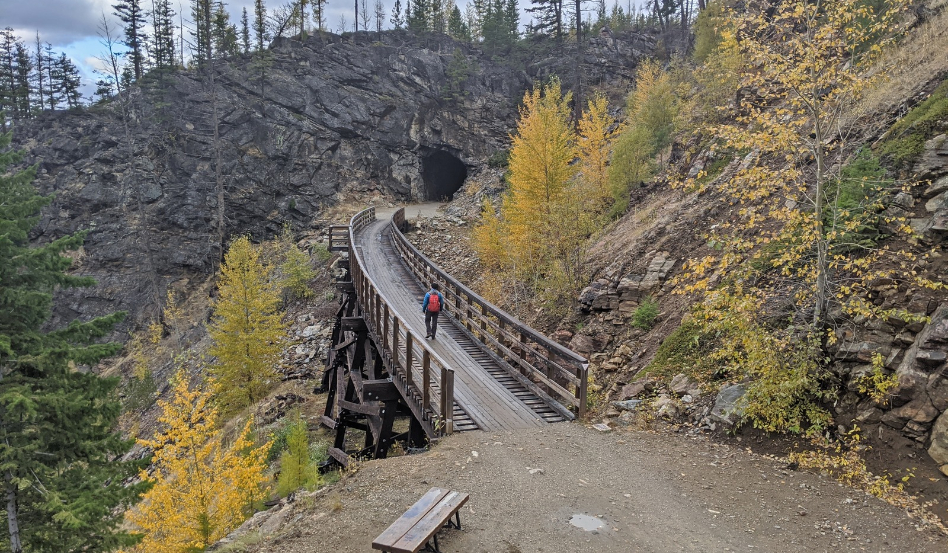
Photo credit: Off Track Travel
Incredible landscapes and a rich history
While Myra Canyon may be a relatively small section of the Trans Canada Trail, it’s a place where landscape, history and recreational opportunities come together to create an experience that is both scenic and rich in stories.
Whether you come to cycle, walk the trestles, learn about the KVR or see the larches turn golden in fall, there are plenty of ways to experience this unique section of the Okanagan Valley. The new Myra Canyon Explorer guide adds another layer to the experience, encouraging visitors to slow down, look closer and connect deeper.
Download the mobile friendly Myra Canyon Explorer guide before your visit from the FOSS website or scan the QR code on the ‘Welcome’ sign at either the Myra Station or Ruth Station parking areas.
Gemma Taylor is an outdoor adventure travel blogger based in Penticton, British Columbia. Happiest on the trails or with a canoe paddle in her hand, Gemma simply loves to be outside, the further off the beaten path the better! Visit Off Track Travel for detailed adventure guides, road trip itineraries and to learn more about hiking in BC’s Okanagan Valley and elsewhere in Canada.
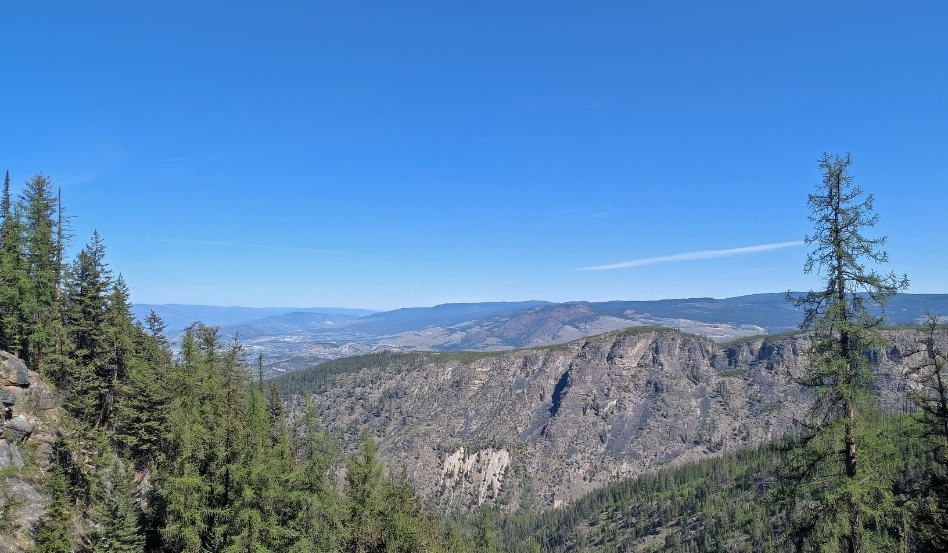
Photo credit: Off Track Travel
About Trans Canada Trail’s Trail Catalyst Fund
The Trail Catalyst Fund is a comprehensive funding initiative designed to enhance the quality, connectivity, and sustainability of the national trail network. It supports strategic investments in trails and the trail sector, all with the goal of fostering a safe, inclusive and resilient Trans Canada Trail.
Learn more about the impact of our funding in our recent annual report.
Feature photo credit: Off Track Travel