
Taryn’s Trans Canada Trail: How to Leave No Trace When You’re Out on the Trail

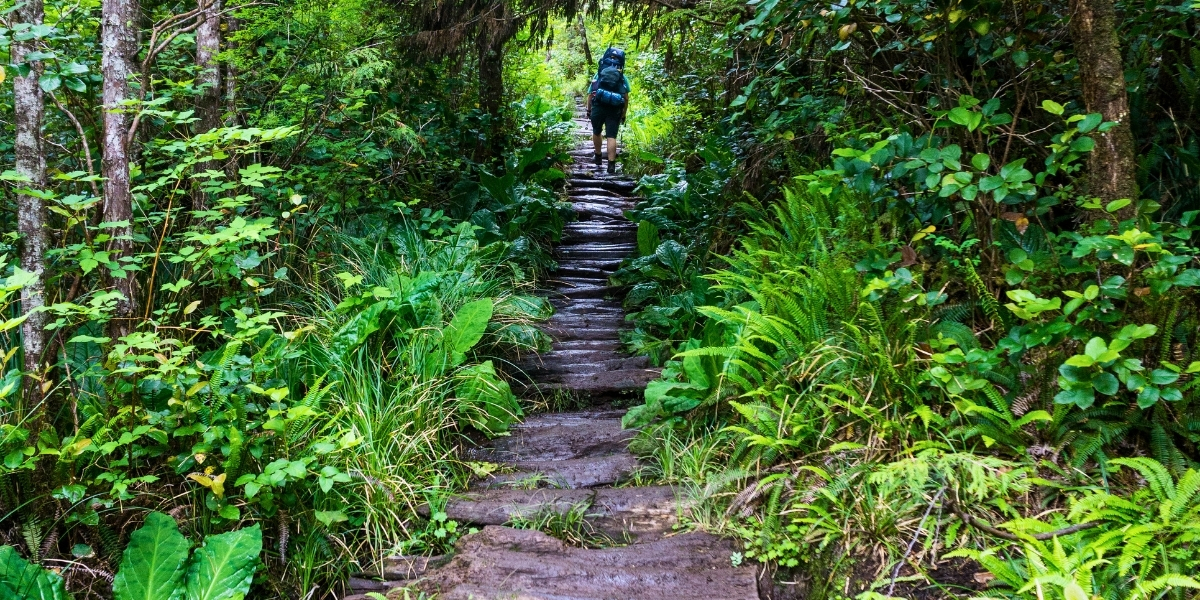
Written by Taryn Eyton
Spending time outdoors comes with a shared responsibility to care for the places we visit. Leave No Trace offers a simple framework for enjoying the outdoors while minimizing our impact.
What is Leave No Trace, and why is it important?
Leave No Trace (often shortened to LNT) is a set of seven principles that help people enjoy nature while leaving it as unchanged by human impact as possible. The goal isn’t perfection; it’s progress. Even small changes in how we recreate can make a big difference. You can learn more from Leave No Trace Canada, one of many LNT organizations around the world.
As outdoor recreation becomes more popular, the LNT principles matter more than ever. When too many people visit natural spaces without understanding their impact, those places can become degraded, or “loved to death.” Learning and sharing about Leave No Trace helps protect wild places so they remain open and beautiful for generations to come.
Here are a few simple ways to put the Leave No Trace principles into practice, both on and off the Trans Canada Trail.

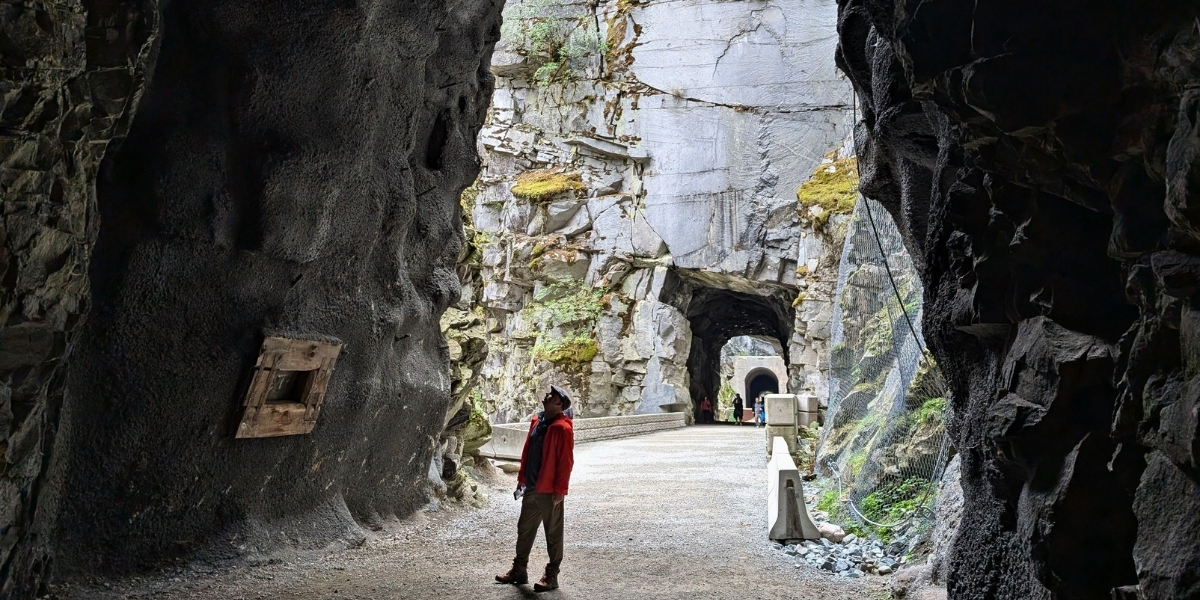
Photo credit: Taryn Eyton
Plan ahead
The first principle of Leave No Trace is Plan Ahead and Prepare. To ensure you pick an outing that matches your experience level, start by researching the trail you plan to visit. Look into current conditions, park regulations, trail difficulty and how long the hike typically takes. It’s also important to check the weather forecast so you know what clothing, gear and supplies to bring. Being prepared makes your trip safer and reduces the chance that you’ll need to take shortcuts that could harm the environment.
Stay on Trail
Trails are carefully designed to be hardy enough to handle regular foot (and sometimes bike) traffic. When people wander off trail or cut switchbacks, they can trample sensitive vegetation that may take years to recover. That’s why the second principle of Leave No Trace is Travel and Camp on Durable Surfaces. If you encounter a muddy section of trail, it’s best to walk straight through it. Skirting around puddles might keep your boots clean, but it widens the trail, which, over time, makes the trail even muddier since the edges of the trail aren’t hardened to withstand bootprints and tire tracks.
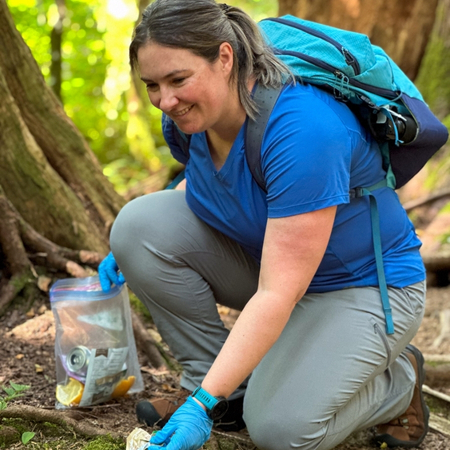
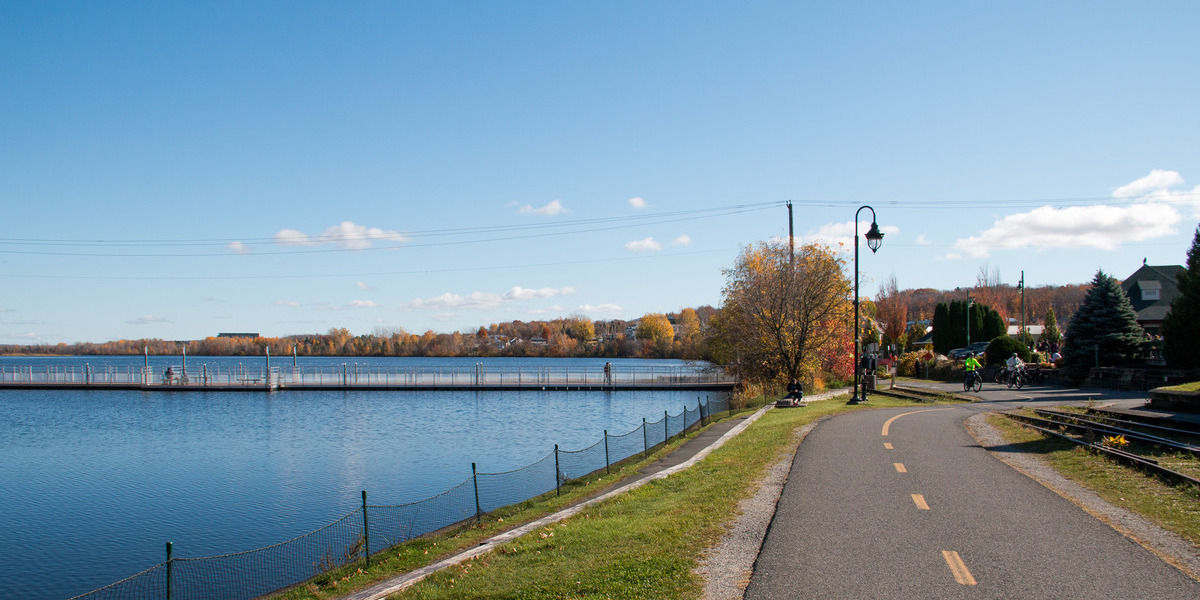
Photo credit: Taryn Eyton
Pack out your trash
The third principle of Leave No Trace is to Dispose of Waste Properly, which includes everything from responsible toilet practices to garbage. Most people have heard the phrase “pack it in, pack it out,” but did you know that aphorism applies to more than just obvious trash? Even biodegradable items like peanut shells and orange peels should be packed out. They can take months to break down and, in the meantime, they may attract animals or encourage others to leave their litter behind.
Take a photo, not a souvenir
It can be tempting to pick wildflowers or make stacks out of rocks. But if every visitor took something or rearranged nature, our trails would quickly lose the very things that make them special. The fourth principle of Leave No Trace is Leave What You Find. So instead of taking something with you, take a photo to capture the moment instead.
Consider skipping the campfire
Fire can be destructive, which is why principle five focuses on Minimizing Campfire Impacts. If you’re out for a longer Trail excursion and stop overnight, and you choose to have a campfire, keep it in a designated fire ring and make sure it is fully extinguished before you leave. But in many cases, it’s worth skipping the campfire altogether. During warm summer months, a fire isn’t necessary. And during periods of high wildfire danger, campfires may not be allowed. Cooking on a camp stove is faster and more efficient than cooking over a fire. And instead of gathering around a fire, you can bring a lantern and enjoy stories, games, and conversation under the stars.

Bring binoculars
Seeing wildlife is one of the highlights of spending time outdoors. But it’s important to remember that you are visitors in their home. Getting too close can stress animals and may alter their natural behaviour. That’s why the sixth Leave No Trace principle is Respect Wildlife. Keeping your distance helps protect both wildlife and people. Binoculars or the zoom lens on your camera are great tools for getting a closer look while giving animals the space they need.
Let nature’s sounds prevail
Trails, parks and backcountry areas are shared spaces. Everyone comes to the outdoors for their own reasons, so it’s important to follow the seventh and final principle of Leave No Trace: Be Considerate of Other Visitors. A simple way to do that is to let nature’s sounds prevail. Instead of playing music, take the time to listen to the wind in the trees, the burble of a nearby stream or birds calling overhead.
So the next time you’re planning a Trans Canada Trail excursion, be sure to keep Leave No Trace principles in mind, follow good hiking etiquette, and have fun!
Taryn Eyton is a Squamish-based writer and the founder of the outdoor adventure website, HappiestOutdoors.ca. She is also the author of two hiking guidebooks: Backpacking in Southwestern British Columbia: The Essential Guide to Overnight Hiking Trails (Greystone Books, 2021) and Backpacking on Vancouver Island: The Essential Guide to the Best Multi-Day Trips and Day Hikes (Greystone Books, 2024). Taryn is a Leave No Trace Master Educator, the President of the Friends of Garibaldi Park Society, a member of the Board of Directors of the Vancouver International Mountain Film Festival, and a Fellow of the Canadian Geographic Society.
Follow her on Instagram at @happiestoutdoors or Facebook at https://www.facebook.com/happiestoutdoors.
About Trans Canada Trail’s Climate Sustainability and Nature initiative
Through the Climate Sustainability and Nature initiative, Trans Canada Trail helps communities protect, restore and future-proof Canada’s nationwide trail system by focusing on nature-based solutions, like tree planting and invasive species removal, and offering supports for designing, adapting and building sustainable trails. We work with partners across the country to keep trails safe and resilient for today and future generations.
Donate today to support Trans Canada Trail.
Main photo credit: Taryn Eyton