
Leigh’s Trans Canada Trail: Wildlife on the Trail Near Calgary

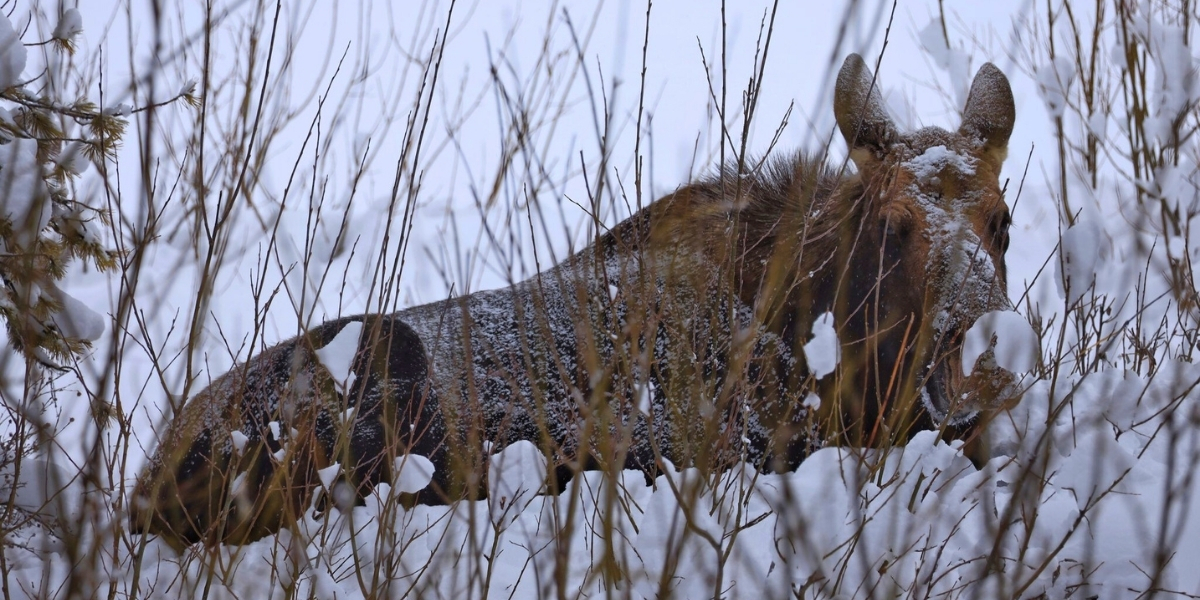
Where to spot moose, winter birds and more
Written by Leigh McAdam
If you’re a nature lover, winter can be one of the best times to explore sections of the Trans Canada Trail near Calgary. Birds are more visible and fresh snow makes animal tracks pop. Patience, timing and a bit of luck are all part of the equation.
The five sections of the Trans Canada Trail described below — one within the city limits and four outside the city — consistently reward hikers, snowshoers, cross-country skiers and winter cyclists.
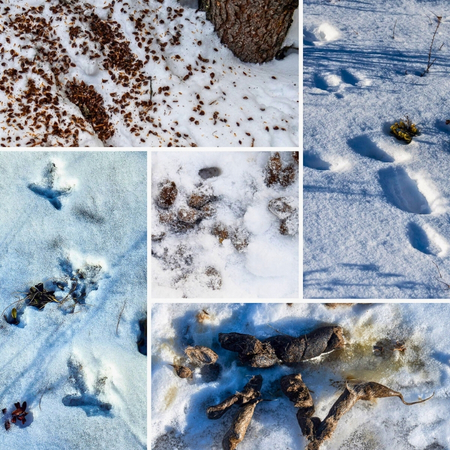
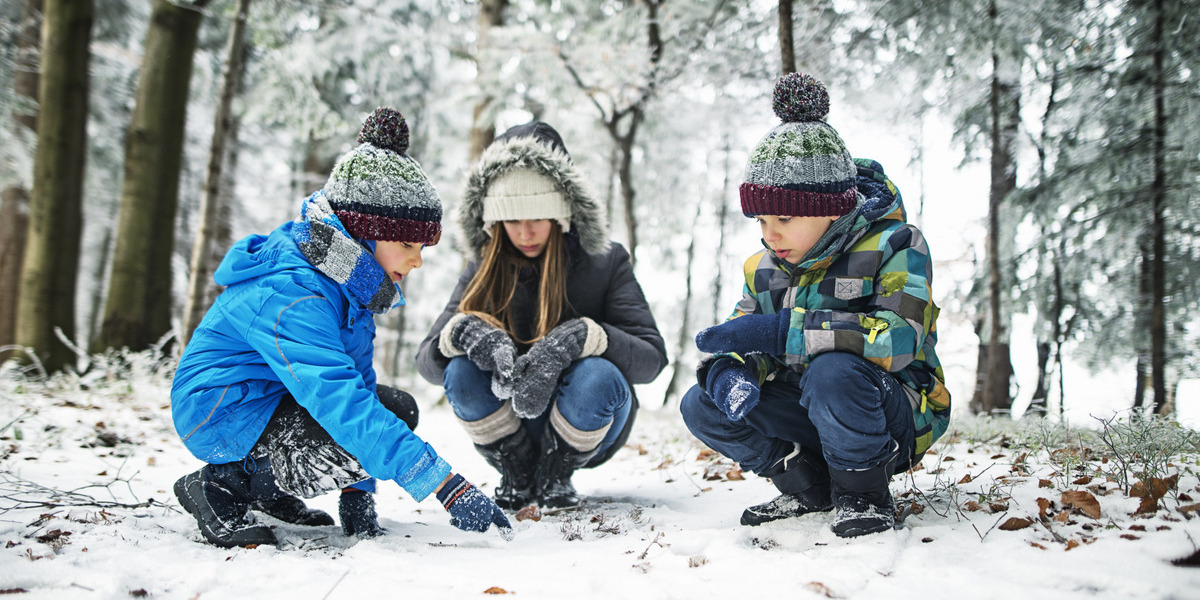
Even if you don’t see big animals like moose and lynx, you’re sure to find something that piques your interest. Tracks in the snow, feathers, fur, scat, feeding signs, overwintering birds or depressions where animals have slept all tell a story.
It’s important to be realistic. Sightings can be fleeting or indirect, but that’s part of the fun.
Top left going clockwise – Leftover cone scales via red squirrels, snowshoe hare tracks, probably coyote scat, spruce grouse tracks, moose poop in the middle. Photo credit: Leigh McAdam – HikeBikeTravel
Before you head out
Save for the Bow River Pathway, all the areas I visited were either snowy or icy, so microspikes and a hiking pole are smart additions.
Pack winter hiking essentials: layered warm clothing (synthetics or wool), a warm coat, mittens, a hat, insulated hydration, high-calorie foods, a hot drink and sun protection. Don’t forget to let someone know where you’re going.
Bow River Pathway in Calgary
One of the premier sections of the Trans Canada Trail in Calgary parallels the Bow River, winding past Carburn Lagoon and Sue Higgins Park. On a sunny December day, I spotted rafts of goldeneyes and mallards riding the Bow River’s current. A couple of noisy killdeers worked the water’s edge. Closer to the lagoon, black-capped chickadees and northern flickers flew about. I didn’t see any bald eagles or great-horned owls though they’re commonly sighted. Coyotes and white-tailed deer were likely nearby, waiting for a quieter time to make an appearance.
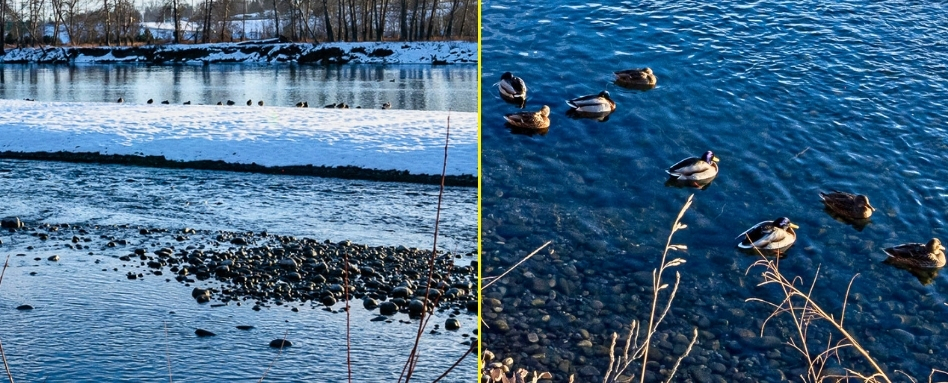
Left: Goldeneyes along the Bow River. Right: Mallard ducks. Photo credit: Leigh McAdam – HikeBikeTravel
Cochrane along the Bow River West
Jim Uffelmann Memorial Park in Cochrane features a pretty stretch of the Trans Canada Trail alongside the Bow River. I had come hoping to see a bald eagle or two perched in a cottonwood tree but the best I could do was a couple of goldeneyes swimming in the river.
It was a lesson in matching expectations with reality.
I did see the fresh teeth marks of a beaver on a tree stump along with a host of magpies, ravens and black-capped chickadees.
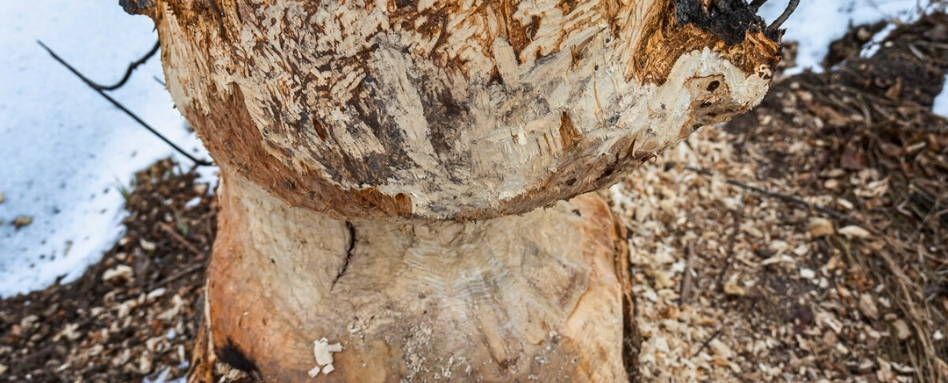
Fresh teeth marks of a beaver in Jim Uffelmann Memorial Park. Photo credit: Leigh McAdam – HikeBikeTravel
Glenbow Ranch Provincial Park
The Trans Canada Trail runs the length of Glenbow Ranch Provincial Park — roughly paralleling the Bow River. It’s a wonderful place to visit in winter as you rarely see a soul — but you’re almost always guaranteed a white-tailed or mule deer sighting, especially on one of the side trails.
Judging by all the animal tracks I saw, there is also a lot of coyote and snowshoe hare activity. I even found some fresh scat though I couldn’t tell whether it belonged to a coyote or a wolf. Overhead the ravens made lots of noise as did a hawk swooping in on a probable deer mouse. There’s a lot of action here, and that doesn’t even count the bird life along the river’s edge.
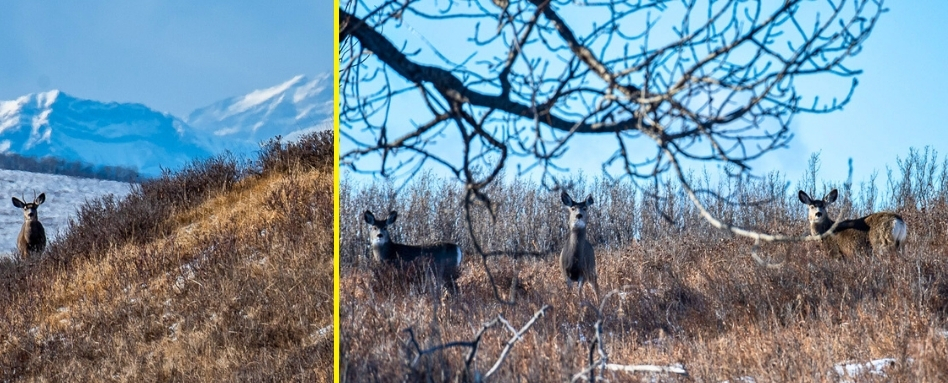
Left: White-tailed deer in Glenbow Ranch Provincial Park. Right: And all its buddies. Photo credit: Leigh McAdam – HikeBikeTravel
Peter Lougheed Provincial Park area
Over two days snowshoeing and cross-country skiing in Peter Lougheed on and just off the Trans Canada Trail, I spied animal tracks from the tiny deer mouse to the majestic moose. Snowshoe hare and coyote tracks were also common, but I never spied a lynx track. Ravens abound, croaking to let you know they are around. I couldn’t miss the Canada jays seen holding out for food in a snowstorm.
One of the highlights was fresh moose tracks and a depression in the snow where the moose had slept. A year earlier my friend snapped the photo below at almost the same spot.
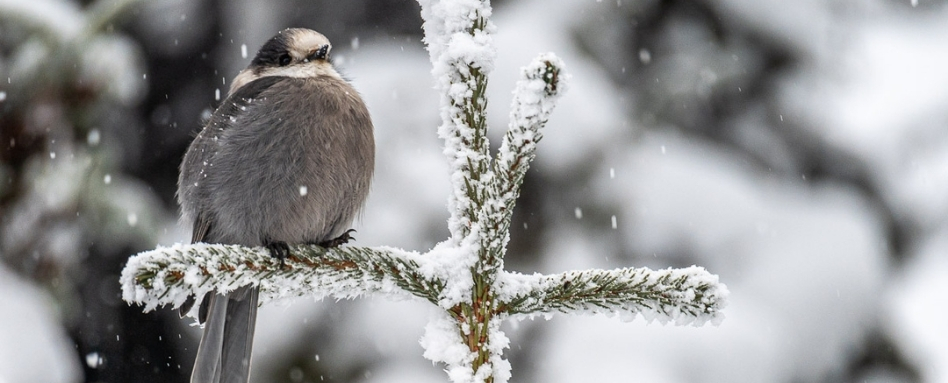
Canada jay in a snowstorm in Peter Lougheed Provincial Park. Photo credit: Leigh McAdam – HikeBikeTravel
West Bragg Creek and Elbow Valley section
I moved to Bragg Creek in the summer and now live within a block of the Trans Canada Trail. I’ve become very tuned in to the birds and animals you might see along this stretch. White-tailed deer are ubiquitous. It’s a rare day you don’t see them in the fields and around town. Red squirrels are common but bigger animals like moose are rare. In the coniferous forest it’s hard to miss the spruce grouse as they make so much noise getting off the ground. I frequently see blue jays as well as boreal, mountain and black-capped chickadees, and hairy and downy woodpeckers. On occasion I’ve been treated to flocks of white-winged crossbills and Bohemian waxwings. One of my favourites, the black dipper, hangs around the Elbow River — usually on cold days when the rest of the birds have gone quiet.
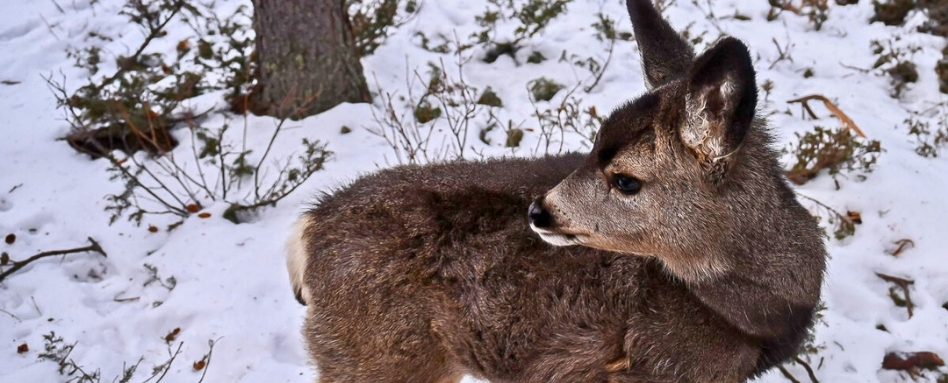
One of the local Bragg Creek area young deer. Photo credit: Leigh McAdam – HikeBikeTravel
Final thoughts
Winter wildlife viewing on the Trans Canada Trail near Calgary isn’t about ticking animals off a list. Some days you’re lucky and spot a bald eagle or a moose; other days you’ll notice only tracks in the snow or birds flitting through the trees. But paying attention by slowing down, observing and studying the signs makes every winter outing rewarding in its own way.
Leigh McAdam is a Bragg Creek-based award-winning photographer who loves hiking, biking, paddling and winter sports. You can find her work at HikeBikeTravel.com. She is also the co-author of 200 Nature Hot Spots in Alberta.
Turn your winter blahs into Ahhhs along the Trans Canada Trail. Find inspiration, enter our contest and more!
The experiences shared here are made possible through the work of Trans Canada Trail and our partners. From seasonal repairs and upgrades to supporting local trail groups, we’re committed to building a lasting, resilient, and accessible trail network that people across Canada can enjoy every day.
Read more about how Trans Canada Trail strengthens trails and communities from coast to coast to coast.
Feature photo: One of the local Bragg Creek area young deer. Photo credit: Mandy Johnson.