
Opinion: Bike lanes are crucial public infrastructure, not political props

Trans Canada Trail CEO Mathieu Roy on why investing in active transportation infrastructure should go beyond party lines
It’s no secret that elected officials and candidates for public office are forced to navigate an increasingly polarized populous. But what happens when divisive debates stand in the way of real progress?
Take, for example, the numerous heated discussions happening across the country over bike lanes. What should be a straightforward discussion about safety, efficiency and design has instead become a political flashpoint.
This Sunday, communities across my home province of Quebec will vote in municipal elections and cycling infrastructure has been a focal point of political debate. But this issue is, of course, far from unique to Quebec.
Throughout Canada and the United States, public discourse tends to frame cycling infrastructure as a symbol of division rather than progress. But when this conversation becomes a “drivers versus cyclists” debate, it misses the point, and the opportunity. Active transportation infrastructure isn’t an ideological project, it’s a way to make our communities healthier in every sense of the word.
For decades, North American streets have been designed almost exclusively for cars. Yet not everyone drives, and many who do would happily leave the car at home if they felt safe and supported to walk, cycle or roll. Investing in cycling or pedestrian infrastructure isn’t about privileging one mode of transportation over another, it’s about sharing public space fairly and planning for a future where everyone has options.
Cities around the world, and even some in North America, have proven that when our public spaces are designed for more than moving motor vehicles as quickly as possible, the benefits are numerous. Well-designed cycling and pedestrian-friendly networks bring more people to local businesses, improve safety for all users and even reduce traffic congestion, rather than cause it — after all, as study after study has found, the only way to truly reduce traffic is to have fewer cars on the road.
At Trans Canada Trail, we see the benefits of active transportation in action every day. Communities with a well-connected trail system, many of which include bike lanes, enjoy improved public health, environmental improvements and boosts in economic activity. Nationwide, these benefits amount to billions of dollars every year.
While much of this debate clings to outdated ideas about who the road is “for,” the reality is that mobility preferences are already shifting. Research has found that young people have become more likely to delay or even avoid getting a driver’s license. In Quebec, the number of 16-to-24-year-olds who have a driver’s license has fallen by 30 per cent since 1978.
At the same time, the way goods move through cities is changing, too. Companies like Amazon and FedEx are already moving toward smaller, more agile vehicles like e-cargo bikes to make last-mile deliveries, especially in urban cores.
Opponents of cycling infrastructure often point to the costs associated with implementing and maintaining projects like bike lanes. But investments in active transportation pay dividends across society and save municipalities money in the long-term — think of the staggering amounts of public money that currently goes into infrastructure like highways and parking, which only serve drivers.
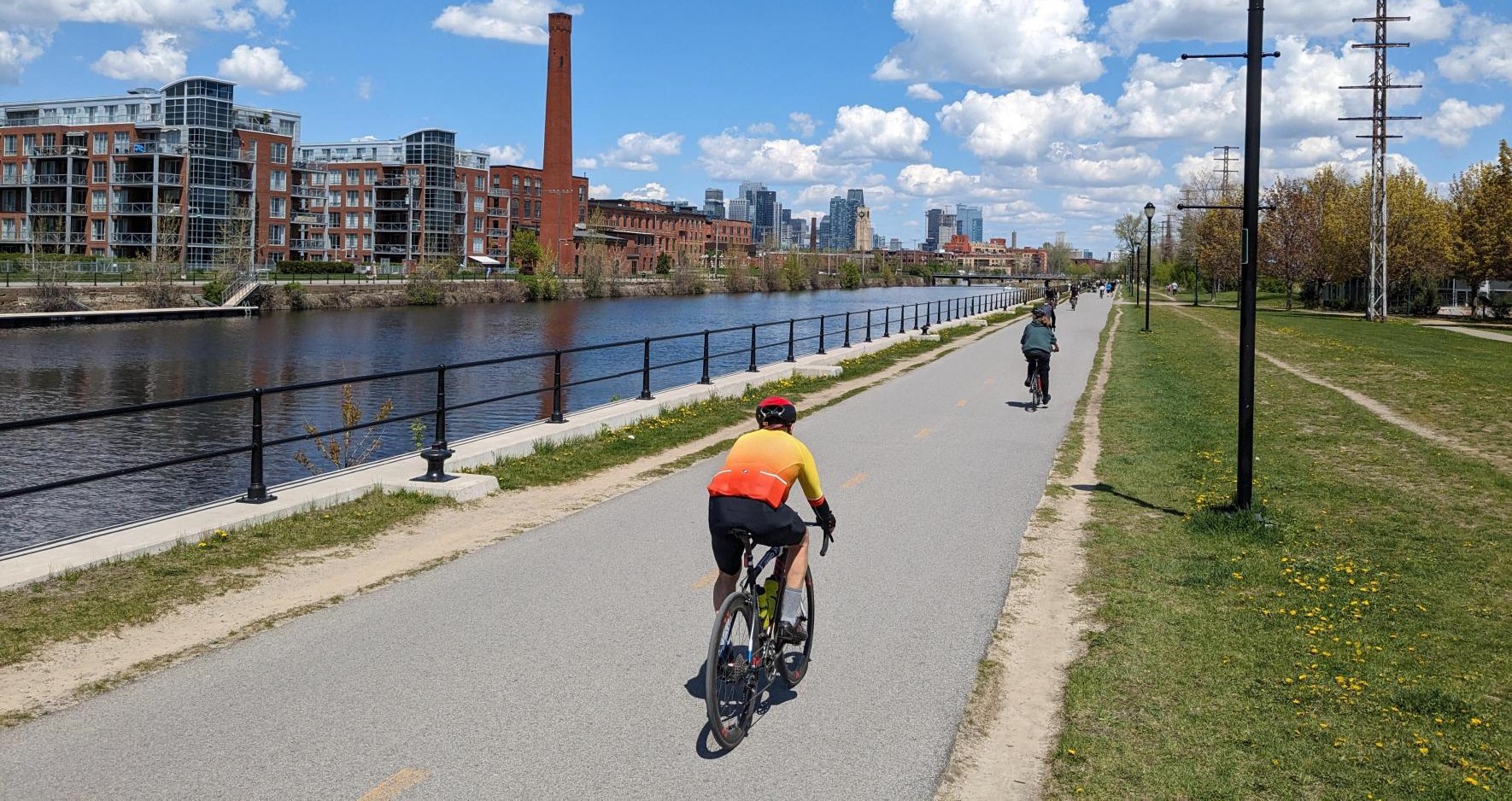
North Americans often look at the active transportation infrastructure of Europe with jealousy and think, “that will never happen here.” But we have already made progress on this side of the Atlantic. Urban centres like Montreal get most of the headlines — with good reason having grown its cycling network by 35 per cent since 2017. But even smaller communities like Sainte-Julie, QC, Squamish, BC and Canmore, AB have seen the benefits of investments in cycling infrastructure.
The question we should be asking now isn’t whether we have “too many” bike lanes, but whether we can move beyond the false binary choice between “cars” and “cyclists.” Our leaders should see mobility not as a zero-sum game, but as a shared challenge that demands shared solutions.
It is critical that we continue moving forward and do not allow reactionary debates to undo the progress we’ve made. Because when we make it easier for more people to move safely and sustainably, everyone wins.
A version of this opinion column was published on Canada’s National Observer.